












Complete Guide to Industrial Stack Lights: How to Choose the Right LED Tower Light for Your Machine

In modern factories and automated production lines, Stack Lights are one of the simplest but most powerful tools for monitoring machine status. With just a quick glance at a tower of colored LEDs and – if needed – a buzzer sound, operators, maintenance and supervisors can immediately understand whether a line is running normally, waiting for material, or stopped with a fault.
In this guide, we will explain what an Industrial Stack Light is, how the Stack Light Color Code works, why Led Stack Lights are now standard in industry, and how to select the right model (voltage, layers, buzzer, mounting type, etc.) for your machine. Throughout the article, you will find links to Mucco’s product pages so you can easily move from theory to selecting the exact model you need.
To explore all models directly, you can always visit our main category page: Mucco Stack Lights.
What Is a Stack Light?
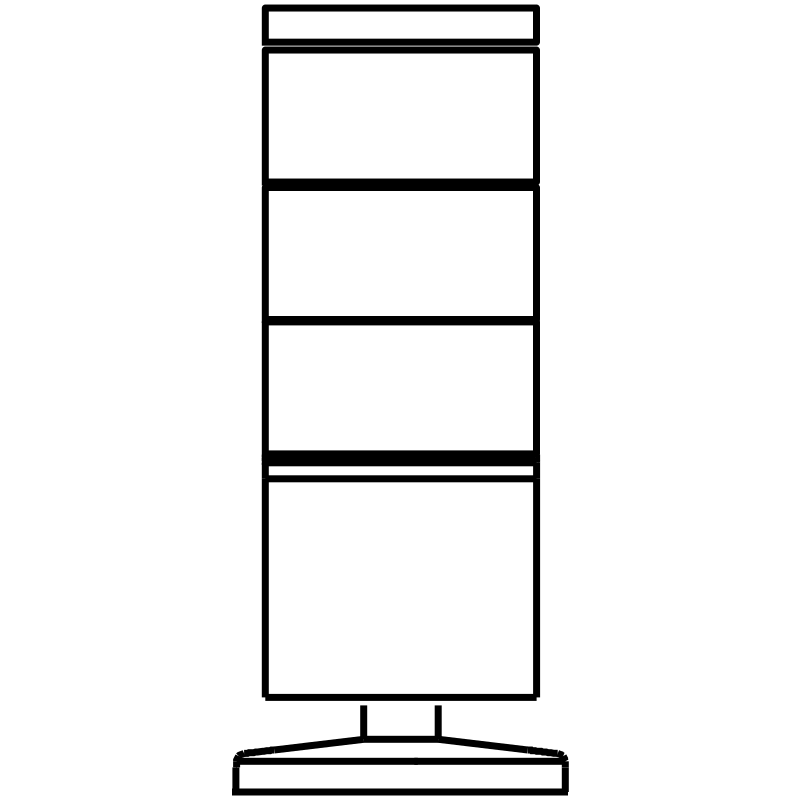
A stack light is a vertical tower made of several colored light modules placed one above another. Each color represents a different status of a machine or process – for example, green for “running”, yellow for “warning”, red for “fault” and so on. When required, a buzzer or siren can be integrated at the top or bottom of the tower to provide an audible warning in addition to the visual signal.
Because they are visible from long distances and from different angles, stack lights are ideal for production areas where many machines are running at the same time. A single operator or supervisor can walk through the line and instantly see which machines are working normally and which ones need attention.
Mucco’s Industrial Stack Light range is designed specifically for harsh industrial environments. Using high-brightness SMD LEDs and robust housings, they provide long service life with minimum maintenance even in demanding applications such as CNC machines, packaging lines, conveyors, assembly stations and process machinery.
Why Modern Factories Prefer LED Stack Lights
Traditional tower lights sometimes used incandescent bulbs or xenon lamps. Today, almost all new installations prefer Stack Light Led solutions, and for good reasons. Led Stack Lights offer:
- Very high brightness with low power consumption
- Extremely long lifetime (tens of thousands of hours), reducing maintenance and downtime
- Shock and vibration resistance – especially important on machine tools and heavy-duty equipment
- Compact size and slim design, while still keeping wide viewing angles
- Clear colors that remain visible even in bright ambient light
Mucco Stack Lights use high-efficiency LED technology in 70 mm diameter bodies with colored lenses, ensuring that every status change is clearly visible for operators on the production floor. When you switch from conventional lamps to LED modules, you not only save energy, but you also remove many small but annoying maintenance tasks like replacing burned-out bulbs.
Understanding the Stack Light Color Code
A key advantage of stack lights is that you can use standardized colors to communicate machine status. While every factory can define its own rules, there is a common Stack Light Color Code that is used in many industries:
| Color | Typical Meaning |
|---|---|
| Red | Emergency stop, machine fault, safety issue, production stopped |
| Yellow / Amber | Warning, process deviation, low material, minor fault, attention required |
| Green | Normal operation, machine running within limits |
| Blue | Operator call, maintenance request, quality check required |
| White / Clear | Custom condition – often productivity or special mode |
When you plan a new installation, it is good practice to document your color logic and use the same code on all Industrial Stack Light units in the factory. This makes it much easier to train new staff and to quickly understand alarms, even when somebody moves between different production lines or plants.
Mucco’s product range includes towers with 1, 2, 3, 4 or 5 layers, so you can design simple or very detailed status indication depending on your needs. For example:
- Simple machines can use a one-layer red-only tower for “fault / stop”.
- More complex lines can use a five-layer unit with red, yellow, green, blue and white segments.
You can explore different layer configurations from the main category and subcategories such as Stack Lights With One Layer, Stack Lights With Two Layer and up to Stack Lights With Five Layer.
Choosing the Right Voltage: 24v dc Stack Light vs 110v Stack Light
One of the most important technical decisions is the supply voltage of your tower light. In industrial automation, the two most common options are low-voltage DC and mains or control AC voltage. That’s why you will often see terms like 24v dc Stack Light and 110v Stack Light in catalogues and technical documentation.
A 24v dc Stack Light is usually preferred when:
- Your PLC, I/O modules or machine controls are based on 24 V DC outputs.
- You want safer low-voltage wiring inside the machine or control panel.
- You need to switch lights quickly with transistor outputs or solid-state relays.
A 110v Stack Light (or 115 V / 230 V AC models) can be practical when:
- You retrofit machines where only AC power is available near the mounting location.
- Your control strategy is based on contactors or relay outputs at mains or control voltage.
- The stack light is far from the main control panel and powered from a local AC source.
When you choose from the Mucco product range, always check the voltage option in the technical details and harmonize it with your PLC outputs and safety concept. If you are not sure which voltage is correct, your electrical or automation engineer should make the final selection.
How Many Layers Do You Really Need?
It is tempting to select the tallest tower with the most colors “just in case”. But the best installations are usually simple and clear. Using Mucco’s modular range, you can match the number of layers to the real status information you want to display:
- 1 layer: Perfect for compact machines where only one critical state is indicated – typically red for alarm or stop.
- 2 layers: A common combination is red (fault) + green (run). Many small machines and workstations use this configuration.
- 3 layers: Red (fault), yellow (warning), green (normal). This is very popular on automated lines and CNC machines.
- 4 layers: Adds blue (operator call) or white (special mode) to the standard three-color set.
- 5 layers: Maximum flexibility for complex processes with multiple sub-states.
On the Mucco website, you can easily filter models according to the number of layers. For example, if your line needs three different status levels, visit the Stack Lights With Three Layer category and choose the mounting type that matches your machine (surface mounting, wall mounting, foldable base, with tube, etc.).
Stack Light With Buzzer: When Is Sound Necessary?
In loud production environments, a visual signal alone may not be enough. Operators may be away from the line, looking in another direction, or wearing hearing protection. In such cases, a Stack Light With Buzzer can dramatically improve reaction times.
A typical stack light with buzzer integrates an acoustic module (often around 80–90 dB at 1 meter) into the tower. When a critical alarm is active, the corresponding color segment illuminates and the buzzer sounds with a continuous or pulsed pattern. This double indication reduces the risk of missed alarms and helps maintain safety and productivity.
On Mucco’s site, you will find models with built-in buzzers and also solutions where the sound device is a separate LED warning horn. This allows you to design exactly the sound level and direction you need. When specifying a stack light with sound, consider:
- The noise level of your environment (you may need higher sound intensity in very loud areas).
- Whether you want sound only for red alarms, or also for other states (for example, blue “operator call”).
- Local regulations regarding audible alarms and noise limits.
Stack Light Wiring Diagram and Basic Connection Concepts
Every installation should follow the manufacturer’s documentation and your local electrical standards, but it is useful to understand the general logic behind a Stack Light Wiring Diagram. Most LED tower lights used in industry follow one of these basic concepts:
- A common terminal (common + or common – depending on the model) for the power supply, plus individual terminals for each color and for the buzzer.
- Each control output (from PLC, relay or switch) activates one color by connecting or disconnecting its terminal.
- For DC models, polarity must be respected; for AC models, the wiring is typically based on phase and neutral conductors.
When planning the wiring, keep these points in mind:
- Use the correct wire cross-section according to current and cable length.
- Route signal cables away from strong power cables when possible to reduce electrical noise.
- Use proper protection devices (fuses or circuit breakers) as defined in your machine’s electrical design.
- Always follow your local safety rules and let only qualified electricians work on live systems.
If you are designing a new control panel, group all outputs related to the stack light in one section of your PLC card or relay board. This makes troubleshooting easier when you later modify or expand the system.
Stack Light Switch and Control Options
Depending on your application, you can control your tower light automatically via PLC outputs or manually via a Stack Light Switch on the operator panel.
Typical control options include:
- Automatic PLC control: Each color and buzzer output is assigned to a PLC digital output. The PLC program decides when to turn on or off each segment based on machine conditions (sensors, timers, safety relays, etc.).
- Operator panel switches: In small systems without a PLC, simple selector switches or push-buttons can be used to activate each color. This is common on manual workstations or simple machines.
- Hybrid solutions: For example, the green light is controlled automatically by the machine, while blue is activated manually by the operator to request materials or maintenance.
When designing your control philosophy, document clearly which person (operator, maintenance, supervisor, PLC logic, external system) is allowed to activate each light and sound. This avoids confusion and ensures consistent behavior across all lines.
Typical Applications of Industrial Stack Lights
Industrial Stack Light solutions are used anywhere you need fast, clear status indication. Some typical examples:
- CNC machines and machining centers – monitoring program run, cycle end and tool breakage alarms.
- Assembly lines – andon systems that show when a station needs help or quality inspection.
- Packaging and filling lines – indicating jammed conveyors, low material, or ready-to-run status.
- Injection molding machines – distinguishing mold closing faults, temperature alarms or production OK.
- Warehouse and logistics systems – pick-to-light and put-to-light solutions, conveyor status indication.
- Safety and access control – signaling when a door, guard or safety area is locked or open.
Because stack lights are modular and flexible, the same basic product family can support all of these applications simply by changing color combination, number of layers, voltage and mounting type.
Mucco Stack Light Product Families
Mucco offers a wide range of tower lights designed for industrial use. Within the main Stack Lights category, you will find:
- One-layer models – ideal for simple alarm indication or compact machines: Stack Lights With One Layer.
- Two-layer and three-layer towers – the most common choice for machines with basic run/warn/stop logic: Stack Lights With Two Layer and Stack Lights With Three Layer.
- Four-layer and five-layer towers – for advanced status signaling, multiple alarms and operator calls: Stack Lights With Five Layer.
- Andon kit stack lights with accessories for visual factory and lean manufacturing applications: Andon Kit Stack Light.
Each family includes different mounting types such as surface mounting, wall mounting with tube, and foldable base. This gives you the freedom to install the tower on top of the machine, on a side column, or on a separate stand, depending on what gives the best visibility for operators.
Step-by-Step: How to Select the Right Mucco LED Stack Light
To make your selection easier, you can follow this simple step-by-step approach:
- Define your status levels. Which conditions do you need to show? (For example: normal run, standby, warning, alarm, operator call, quality check.) This will define how many layers you need.
- Choose your color code. Assign each condition to one color according to your factory standards. Keep it as consistent as possible across all machines.
- Select the number of layers. Based on the first two steps, decide if you need 1, 2, 3, 4 or 5 segments.
- Choose voltage and power type. Decide between 24 V DC, 110 V AC or other available options, matching your PLC or control system.
- Decide on sound. Do you need a Stack Light With Buzzer, a separate warning horn, or silent operation? Check noise levels on site before deciding.
- Pick a mounting style. Surface, wall, foldable base or tube height – think about where the tower must be visible from and how the cable will enter.
- Review environmental conditions. Consider dust, humidity, chemical vapors and cleaning methods. Select models with suitable protection class for your environment.
- Plan wiring and control. Make sure your PLC or panel has enough outputs for each color and buzzer, and that the Stack Light Wiring Diagram fits into your existing electrical design.
After you answer these questions, it becomes very easy to select the exact Mucco model from the Stack Lights product category. You can filter by number of layers, mounting type and other technical details to quickly reach the best solution.
Summary: Build a Safer and More Efficient Factory with LED Stack Lights
Stack lights may look simple, but they play a critical role in industrial communication. A well-designed Industrial Stack Light system helps you:
- Reduce reaction time to faults and stoppages.
- Improve operator awareness and job safety.
- Support lean manufacturing and visual factory concepts.
- Standardize status indication across all machines and plants.
By choosing high-quality Led Stack Lights with the right number of layers, correct voltage (24v dc Stack Light, 110v Stack Light, etc.), proper Stack Light Color Code and well-thought control via PLC or Stack Light Switch, you can turn a simple tower light into a powerful industrial communication tool.
If you are planning a new machine, upgrading existing equipment or standardizing your factory signaling, you can discover all Mucco models and technical details here: https://muccosignal.com/product-category/stack-lights/.
Our multi-layer Stack Light Led solutions, andon kits and accessories are designed to help you build safer, smarter and more efficient production lines – with clear visual and audible status indication for every process.