












Signal Beacons Guide: How to Choose the Right Warning Light for Industrial and Vehicle Safety
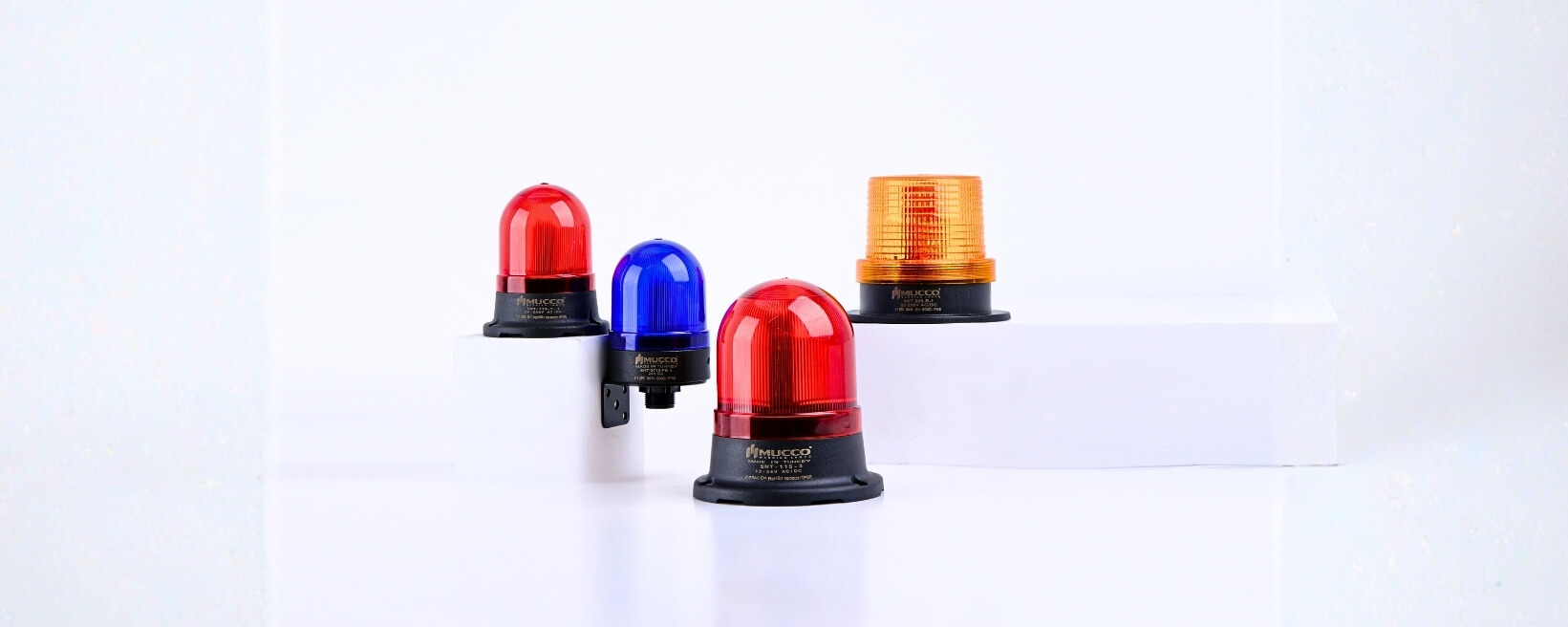
In every modern factory, warehouse, construction site or fleet, signal beacons play a key role in safety and communication. A compact, high-visibility light on top of a machine, forklift or vehicle can prevent accidents, warn operators about hazards and clearly show the status of a process from a distance.
On this page we’ll walk through what different types of beacon lights do, where you can use LED beacons, how to choose the right optical function (flashing, rotating, strobe, steady), which color is best for which situation and how to select the correct Mucco signal beacons for your project.
If you want to jump directly to the product range, you can always visit the category page: Mucco Signal Beacons.
What Is a Signal Beacon?
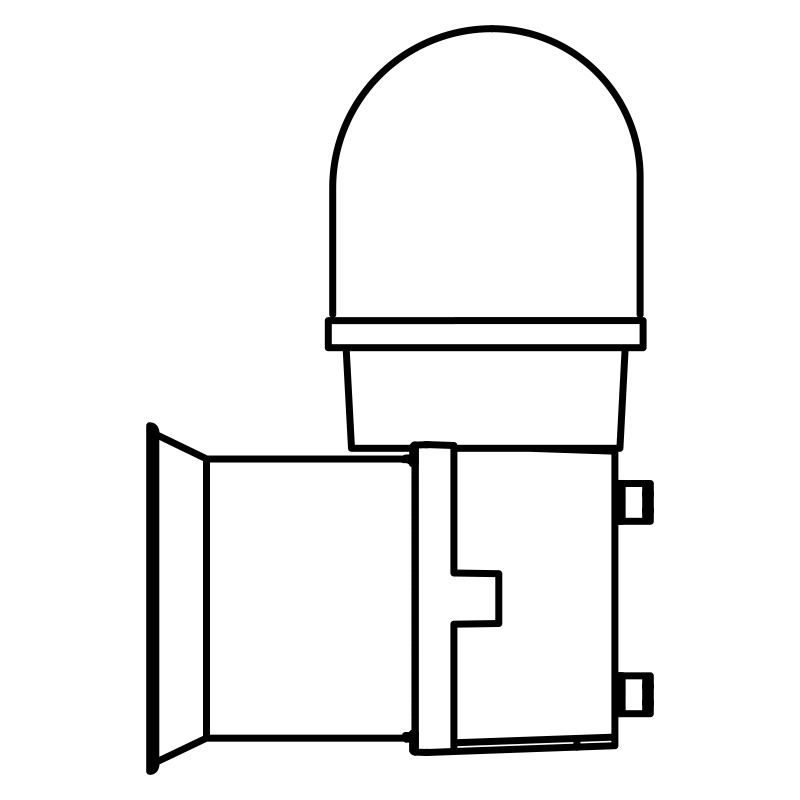
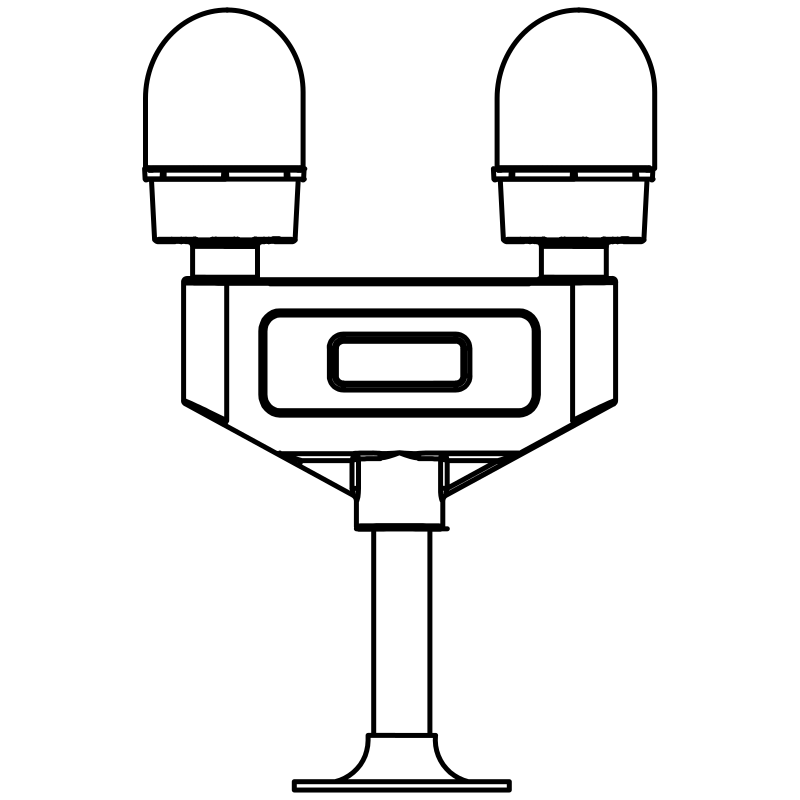
A signal beacon is a high-visibility light used to attract attention and transmit a simple message: “warning”, “hazard ahead”, “slow vehicle”, “machine running”, “emergency”, and so on. In industry they are also called beacon lights, warning beacon, LED warning light or simply rotating beacon, depending on the function and optical design.
Typically, a beacon consists of:
- A robust housing and lens (often polycarbonate) designed for industrial or outdoor use
- An internal light source – halogen or xenon in older designs, but usually LED beacon technology today
- A base or fixing system for mounting on machines, vehicles, walls, poles or roofs
- Electronics that generate the required flash, strobe or rotation patterns
Mucco’s signal beacon range covers compact mini warning lights for small machines, heavy-duty beacons for forklifts and industrial plants, solar beacons for remote areas and many different optical styles to match your application.
Where Are Signal Beacons Used?
Because they are highly visible and easy to understand, warning lights are used in many sectors:
- Industrial machines and production lines – machine signal lights and machine warning lights show if a machine is running, stopped, in alarm or needs attention.
- Forklifts and industrial vehicles – LED forklift lights such as amber flashing beacons warn pedestrians and other vehicles that a truck is moving or operating in a tight area.
- Road maintenance, snow plows and service vehicles – amber beacon and amber beacon light indicate slow-moving or oversized vehicles and road works.
- Warehouses and logistics centres – LED flashing beacon and rotating light highlight active loading zones, moving doors or dangerous areas.
- Marine and aviation – solar powered flashing beacon products mark buoys, docks and obstacles, while beacon lighting lamps on aircraft and towers improve visibility and safety.
- Public spaces and car parks – warning beacon and flashing beacons draw attention to new structures, barriers or temporary hazards.
In every case the goal is the same: use a small but powerful signaling device to clearly inform people about a situation before they get too close.
LED Technology: Why Led Beacon and Led Warning Light Are the New Standard
Older beacons often used rotating mirrors with incandescent lamps or xenon tubes. Today almost all modern products in the Mucco signal beacons range are based on LED beacon light designs – and for good reasons:
- High efficiency – brighter light with much lower power consumption
- Long lifetime – LEDs outlast halogen bulbs by many times, reducing maintenance
- Shock and vibration resistance – perfect for forklifts, construction machines and production lines
- Compact design – slim beacons with high light output and clean optics
- Flexible colors – amber, red, green, blue, clear, bi-color and multi-color options
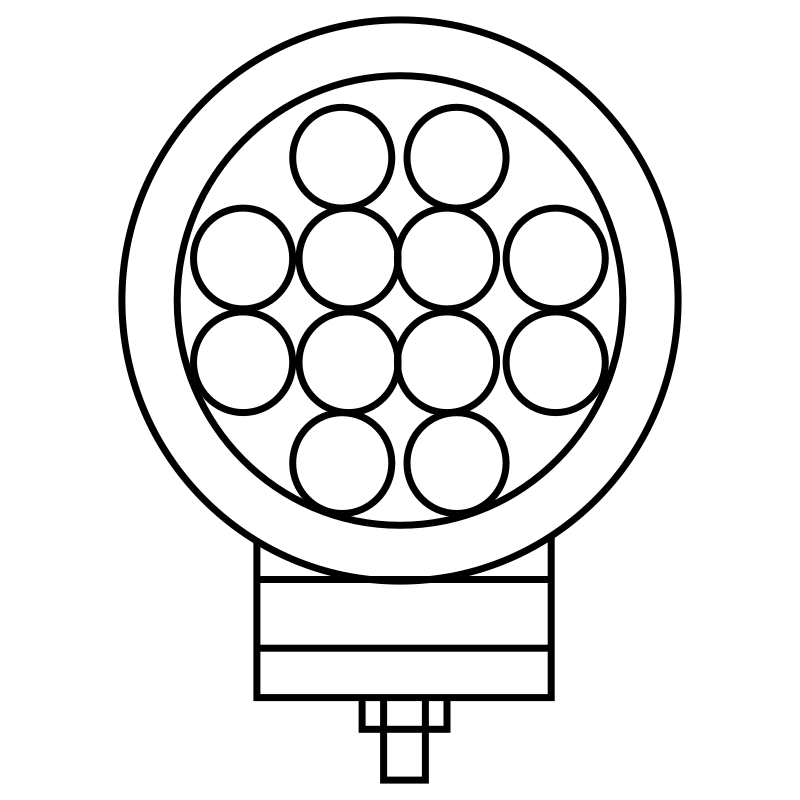
Products like LED beacon warning light and amber LED strobe light beacon offer powerful flash patterns that are visible in bright daylight, while still keeping the power demand low enough for battery-powered vehicles or solar systems.
Main Optical Functions: Flashing, Rotating, Strobe and Steady
When you select a beacon, you usually choose not only the color and voltage but also the optical behaviour. Different tasks require different visual effects:
Flashing Beacons and LED Flashing Beacon
A flashing beacon light turns on and off at a fixed rate, creating a strong contrast with the background and catching the eye quickly. A LED flashing beacon uses LEDs instead of traditional bulbs to create this pulsing effect.
Flashing beacons are ideal when you want continuous attention to a hazard or active process – for example, around automated gates, loading docks, mobile equipment or rail crossings. A flashing amber beacon is commonly used on slow-moving vehicles or service vehicles to make them stand out in traffic.
Rotating Beacon and Rotating Light
A traditional rotating beacon uses a moving mirror or lens that sweeps a beam of light around 360°. A rotating light creates a “sweeping” highlight that many people associate instantly with construction vehicles, emergency vehicles or airport equipment.
Modern LED rotating beacon and rotating beacon light designs often simulate this effect electronically with fixed LEDs and clever optics, giving the same visual message with fewer moving parts and higher reliability.
Strobe Beacon
A strobe beacon produces very intense, short flashes of light, similar to a camera flash. Strobe patterns are especially good for situations where you must be seen from long distances or through bright ambient lighting – such as on cranes, tall structures, marine markers or special vehicles.
An amber LED strobe light beacon combines the benefits of amber (caution) with the high intensity of strobe technology, making it ideal for road service fleets, construction equipment and escort vehicles.
Steady and Bi Color Visual Signal Light
Some applications need a permanent, steady illumination rather than a flashing pattern – for example to mark a safe pathway or to show that a particular zone is active. In these cases a constant‐on LED warning light is more appropriate.
A bi color visual signal light can show two different colors in the same unit – for instance green when a gate is open and red when it is closed – saving space and installation time.
Color Choice: Amber, Green, Blue and More
The color of your beacon sends a very strong message. While local regulations may define some meanings, a typical industrial convention looks like this:
- Amber beacon / amber beacon light / yellow beacons – general warning, slow vehicle, moving equipment, road works, machinery in operation.
- Red beacon warning light (and red rotating/strobe) – emergency, serious alarm, danger, “stop immediately”.
- Green beacons – safe condition, machine available or ready, route clear (in some medical uses, green may indicate a doctor on emergency duty).
- Blue beacon light – often used on emergency services vehicles (police, ambulance, fire), or in factories for specific priority alerts.
- White / clear – extra illumination, work lights or special signal states.
When you standardise your beacon lighting colour code across your site, operators can understand any beacon at a glance, even in different departments or buildings. For fleets of vehicles, using the same style of amber beacon or LED beacon light on every truck also builds a consistent safety image.
Mini Warning Lights and Compact Solutions
Not every application needs a large, heavy-duty beacon. For small machines, control panels or compact workstations, mini warning light designs are ideal. Mucco offers several mini warning lights and warning light mini variants that provide full 360° visibility in a very small footprint.
These warning lights mini and warning lights on mini devices are perfect when:
- You have limited space on top of a machine or cabinet
- You want local indication but still need it visible from different angles
- You work indoors and don’t require very long-range visibility
- You prefer a low-profile, unobtrusive look on your equipment
Despite their small size, quality mini beacons still use strong LEDs and durable lenses, so you don’t lose reliability or safety. You simply gain a compact, neat solution.
Machine Signal Lights vs. Stack Lights
In industrial automation you will often see both machine signal lights (beacons) and stack lights (multi-layer towers). Both devices serve to communicate status, but they do it differently:
- Machine warning lights / beacon warning light – usually a single beacon mounted on a machine, gate or structure, indicating “on/off”, “running”, “hazard”, “vehicle moving”, etc.
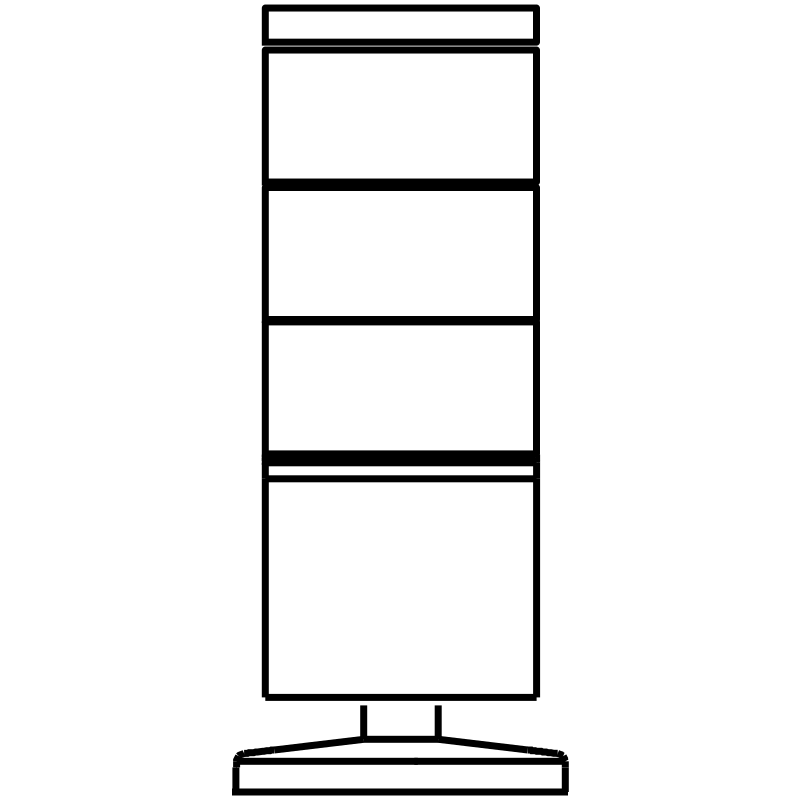
- Stack lights – multi-color tower lights with several segments that can show multiple states at once (run, warning, fault, call, etc.).
For simple machines or vehicles, a single warning beacon is usually enough. For complex machines where you need to show several detailed statuses simultaneously, tower-type lamps from our Stack Lights category are often a better choice.
Many factories use a combination: signal beacons on doors, AGVs and forklifts, and stack lights on production machinery and assembly stations. This gives a complete visual language across the plant.
Maxi Volt and Multi-Voltage Signal Beacons
When you design a system that may be sold into different markets or used on different machines, voltage flexibility becomes very important. Maxi Volt beacons are multi-functional designs that can cover several voltage levels with a single product – for example 12/24 V DC and 110/230 V AC ranges in one model family.
Choosing a Maxi volt beacon can help you:
- Reduce the number of spare parts you keep in stock
- Standardise your machine design for multiple export markets
- Retrofit existing equipment where supply voltage may vary
- Simplify your wiring diagrams by using the same beacon everywhere
Mucco’s multi-voltage beacons are designed for industrial robustness while still offering multiple colour options and optical functions, so you don’t need to compromise between flexibility and performance.
Solar Beacons and Solar Powered Flashing Beacon
Sometimes you need a warning light where no wired power is available – on remote fences, buoys, construction sites, isolated roads or temporary structures. In these cases solar beacons and solar powered flashing beacon units are the ideal solution.
A typical solar beacon includes:
- A small solar panel integrated into the housing
- Rechargeable batteries sized to run the beacon through the night
- A light sensor to switch the beacon on at dusk and off at dawn
- Efficient LED beacons with optimised flash patterns for long battery life
These devices can be mounted on buoys, posts, barriers or poles with simple hardware, making them extremely practical for marine, road and perimeter safety applications.
Warning Light Kit and Light Buzzer Solutions
In some projects you do not only need a single beacon, but a complete warning light kit including bracket, cable, connectors and sometimes an audible device. Mucco’s kit solutions make it easy to add a ready-to-use safety package to a machine, gate or doorway.
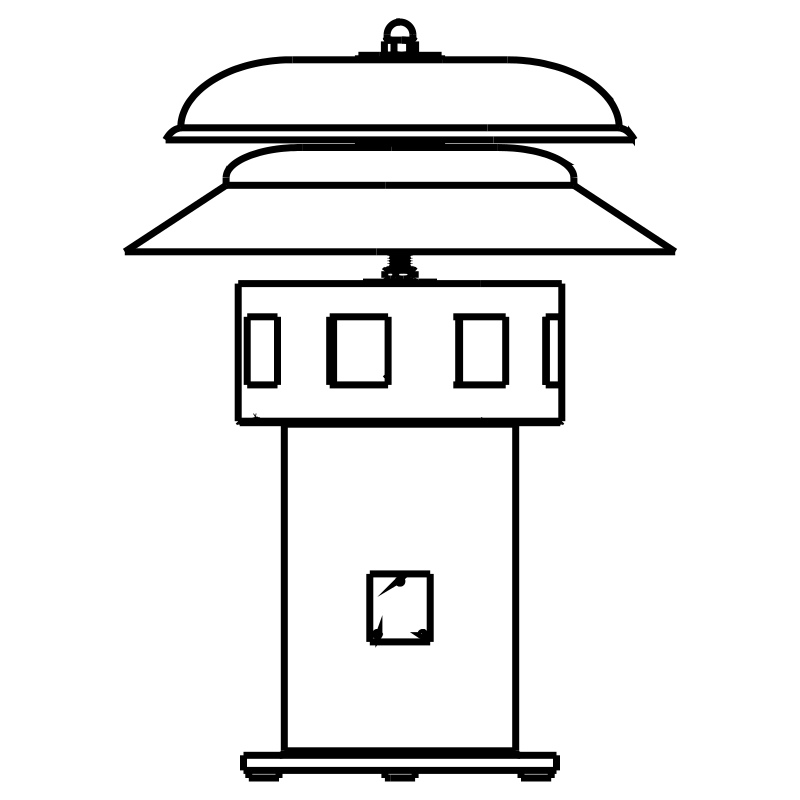
For noisy environments you may also consider a light buzzer or light siren combination. Here the beacon is integrated with an electronic sounder. The light provides visual warning, while the buzzer gives an acoustic alert that can be heard even if the beacon is temporarily out of view.
Typical uses include loading docks, automated doors, robot cells and areas where heavy machinery moves with limited visibility.
Beacon Lighting for Forklifts, Vehicles and Public Areas
Vehicle-mounted beacons are an important part of beacon lighting systems in warehouses, factories and public roads. Well-chosen LED beacon units help protect both workers and equipment.
Examples:
- LED forklift lights – compact amber beacons mounted on the cabin or overhead guard to warn pedestrians when a forklift is moving or lifting.
- Amber beacon light – fitted to maintenance vehicles, road service trucks, snow plows and tow trucks to mark them as slow or special-duty vehicles.
- Blue beacon light – used by emergency services in many countries, often together with sirens and auxiliary strobes.
- Flashing beacon light – mounted on barriers, cranes or temporary structures in car parks and public spaces.
In all these cases, robust housings and vibration-resistant LED electronics are essential. That’s why Mucco’s LED beacon light range is built with industrial-grade materials and tested for demanding environments.
How to Select the Right Mucco Signal Beacon Step by Step
To choose the best model from the Mucco signal beacons range, you can follow this simple checklist:
- Define the application.
Is it a fixed installation on a machine (machine warning lights), a moving vehicle, a marine marker, an outdoor gate or an indoor mini workstation? - Select the optical type.
Do you need flashing beacons, rotating beacon, strobe beacon or steady light? Think about how much attention is needed and at what distance. - Choose the color.
Amber for caution, red for stop/emergency, green for safe or available, blue for emergency or special alerts, bi-color for two states in one housing. - Confirm the voltage.
Check whether you need a specific voltage or a Maxi Volt / multi-voltage solution. Match this to your PLC, battery or supply system. - Decide on size.
For compact places, select mini warning lights or low-profile designs. For long-distance visibility, choose larger lenses and stronger optics. - Consider environment.
Indoor, outdoor, dusty, humid, chemically aggressive or exposed to shock? Choose models with suitable protection, sealing and mechanical strength. - Plan mounting and wiring.
Base mounting, pole mounting, magnetic base, or surface mounting? Check cable entry, connector type and whether you need a warning light kit with accessories. - Check regulations and standards.
For road, aviation or marine use, ensure the selected beacon warning light type and colour comply with local rules.
Once you answer these points, it becomes easy to filter and choose the correct product on the Mucco website. Each beacon’s product page provides technical data such as light pattern, luminous intensity, power consumption and mounting details, so you can integrate it cleanly into your design.
Summary: Build a Safer System with Professional Signal Beacons
Whether you are equipping a new production line, upgrading a forklift fleet, marking a hazardous area or adding visual alarms to your machines, the right combination of signal beacons will greatly improve safety and communication.
By selecting modern LED beacon technology with suitable optical effects (flashing, rotating, strobe), appropriate colours (amber, red, green, blue), and robust housings, you ensure that your warning signals are seen and understood – day and night, indoors and outdoors.
Mucco’s signal beacon product category offers a wide portfolio: from mini warning lights to heavy-duty amber beacon light models, from solar beacons to LED flashing beacon solutions and multi-voltage Maxi Volt beacons.
Explore the range, compare technical specs and choose the beacon that best fits your machine or vehicle. With the right beacon lights in place, you create a safer, more visible and more professional environment for everyone around your equipment.