












Industrial Signal Beacons and Stack Lights: A Complete Selection Guide
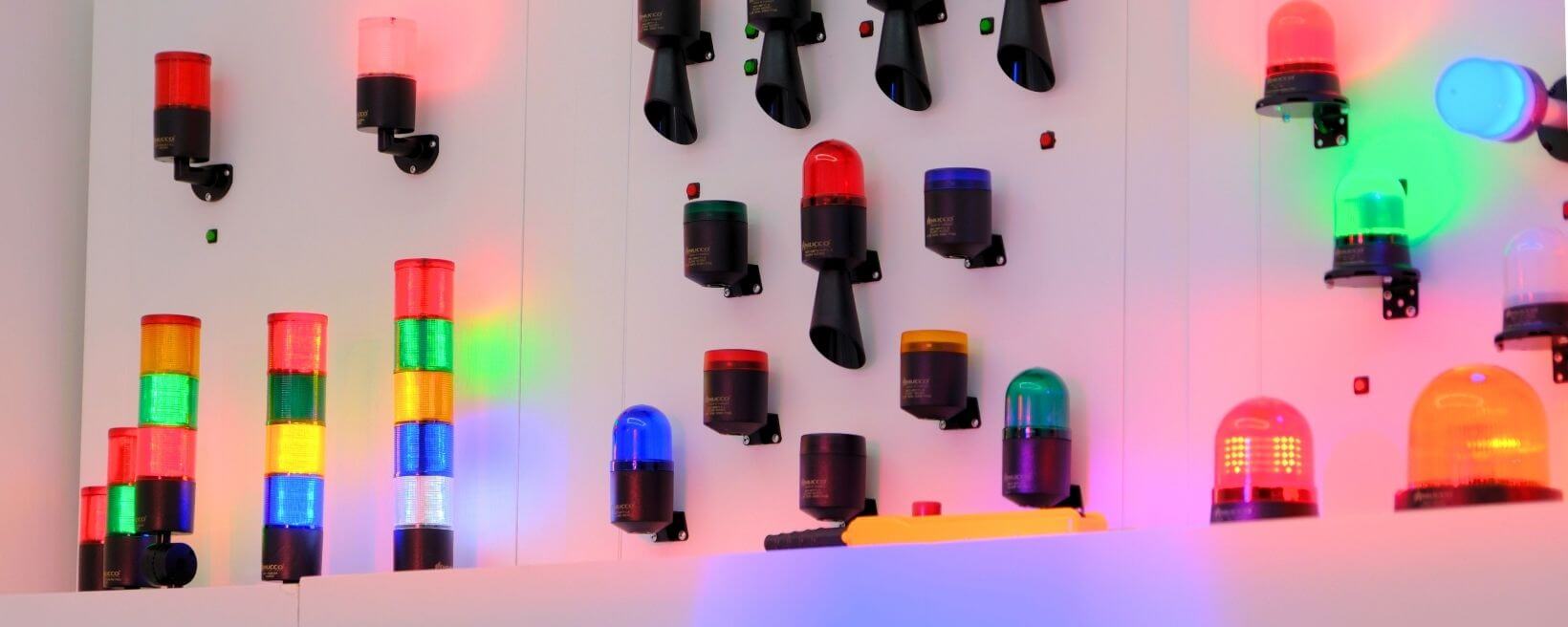
Industrial Signal Beacons and Stack Lights: A Complete Selection Guide for Safer, Smarter Machine Status Communication
In a busy factory, warehouse, process plant, machine workshop or automated production line, information needs to travel quickly. Operators must know whether a machine is running normally, waiting for material, requesting attention, entering an alarm condition or stopping because of a fault. Supervisors need to see production status from a distance. Maintenance teams need to identify the location and urgency of a problem without losing time.
This is where industrial signal beacons, stack lights, warning horns and electronic sirens become essential. A correctly selected warning device turns a machine state into a clear visual or audible message. It helps people react faster, supports standard work routines and makes complex industrial environments easier to manage.
At Mucco Signal, industrial signalling products are designed for applications including automation machines, CNC equipment, conveyor systems, packaging lines, filling machines, process equipment, control panels, technical rooms and heavy-duty industrial areas. This guide explains how to choose the right industrial warning solution for your application and how to build a consistent status communication system across your facility.
Table of Contents
- What Are Industrial Signal Devices?
- Why Machine Status Communication Matters
- Signal Beacon vs. Stack Light: What Is the Difference?
- Industrial Signal Light Colour Coding
- When to Add Audible Warning Signals
- How to Select the Right Industrial Warning Device
- Recommended Mucco Signal Product Families
- Applications for Industrial Signal Beacons and Stack Lights
- Installation and Maintenance Considerations
- Common Mistakes to Avoid
- Frequently Asked Questions
What Are Industrial Signal Devices?
Industrial signal devices are visual and audible indicators used to communicate the operating condition of a machine, production process or safety-related event. They are commonly mounted on machine enclosures, electrical panels, factory walls, equipment frames, control stations and production-line structures.
The most common types are:
- Signal beacons: Single-colour visual indicators used for warning, status indication or location marking.
- Stack lights: Vertical multi-colour lights that display several machine states through separate coloured modules.
- Warning horns: Combined visual and audible products that provide a flashing light together with a sound signal.
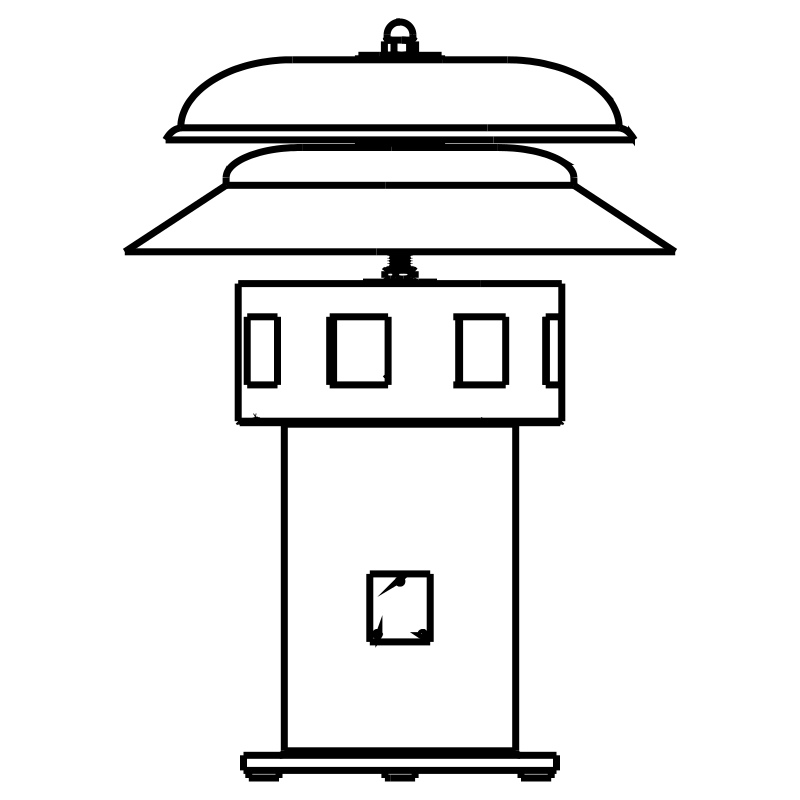
- Electronic sirens: High-output audible warning devices for noisy, open or heavy-duty environments.
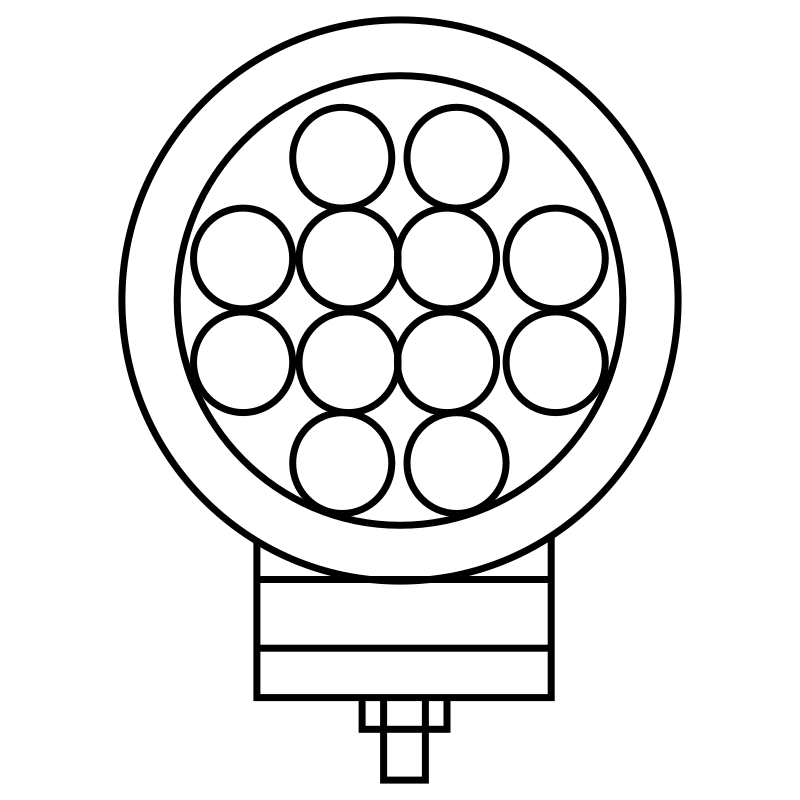
- RGB warning lights: Flexible indicators that can display different colours from a single body, depending on the selected operating mode.
A typical stack light may use green for normal operation, yellow for attention or material shortage, and red for a fault or machine stop. A warning horn may be used when a visual alert alone is not sufficient. In larger facilities, a beacon can make the location of an active process, gate, loading point or hazardous zone easier to identify.
These products are not merely accessories. When they are integrated into a machine-control strategy, they become part of a practical human-machine communication system. The goal is simple: make the correct information visible and understandable before a small issue becomes a long production interruption.
Why Machine Status Communication Matters in Modern Industry
Industrial production relies on timing, coordination and quick decisions. A packaging machine may stop because a roll of film is empty. A CNC machine may finish a cycle and wait for an operator. A conveyor may need a warning before starting. A process line may require an immediate response when temperature, pressure or flow conditions move outside the expected range.
Without a visible communication system, personnel may need to walk to each machine, inspect a display or ask another operator for information. That consumes time and creates uncertainty. With an effective machine status indicator, the condition can be recognized at a glance.
Clear industrial signalling can support:
- Faster response to machine faults and process interruptions.
- Improved production visibility for operators and supervisors.
- More consistent shift handovers.
- Reduced time spent searching for the source of an alarm.
- Better coordination between production, quality and maintenance teams.
- Stronger visual management practices in lean manufacturing environments.
- More understandable communication in multilingual workplaces.
Research on warning communication consistently shows that colour, contrast and clarity influence how quickly people notice and interpret a warning. For example, a peer-reviewed study available through the U.S. National Library of Medicine’s PubMed Central archive discusses how different warning-sign colours affect perceptual processing and hazard perception. Although a machine beacon is not the same as a printed warning sign, the practical lesson is relevant: visual signals should be unambiguous, consistent and easy to detect.
Industrial signalling must also be considered as one part of a wider safety strategy. A beacon or siren can provide a warning, but it does not replace risk assessment, machine guarding, safe procedures, interlocks or required protective measures. Guidance from the Occupational Safety and Health Administration (OSHA) highlights the importance of proper machine guarding and hazard control. Warning devices should support these controls, not be treated as a substitute for them.
Signal Beacon vs. Stack Light: What Is the Difference?
The terms “signal beacon” and “stack light” are sometimes used interchangeably, but they serve different purposes. Selecting the correct format depends on how much information the machine or process needs to communicate.
Industrial Signal Beacons
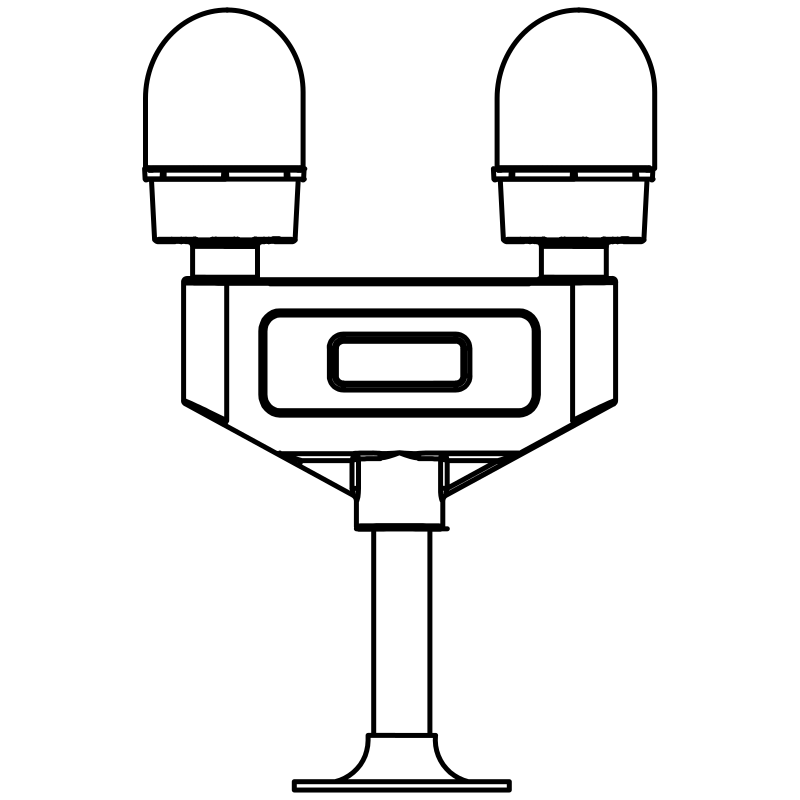
A signal beacon is generally a single visual warning device with one lens colour. It may operate in steady, flashing, strobe, rotary or other light modes depending on the model. Beacons are useful when one clear message is enough, such as “machine fault,” “door open,” “vehicle movement,” “area active,” “tank full,” “process running” or “operator call.”
Beacons are compact and practical for applications where installation space is limited. They are also suitable for control cabinets, machine panels, loading zones, technical rooms and standalone alarm points. If a machine only needs a red fault indication, a single red beacon may be more efficient than a multi-layer tower light.
Industrial Stack Lights
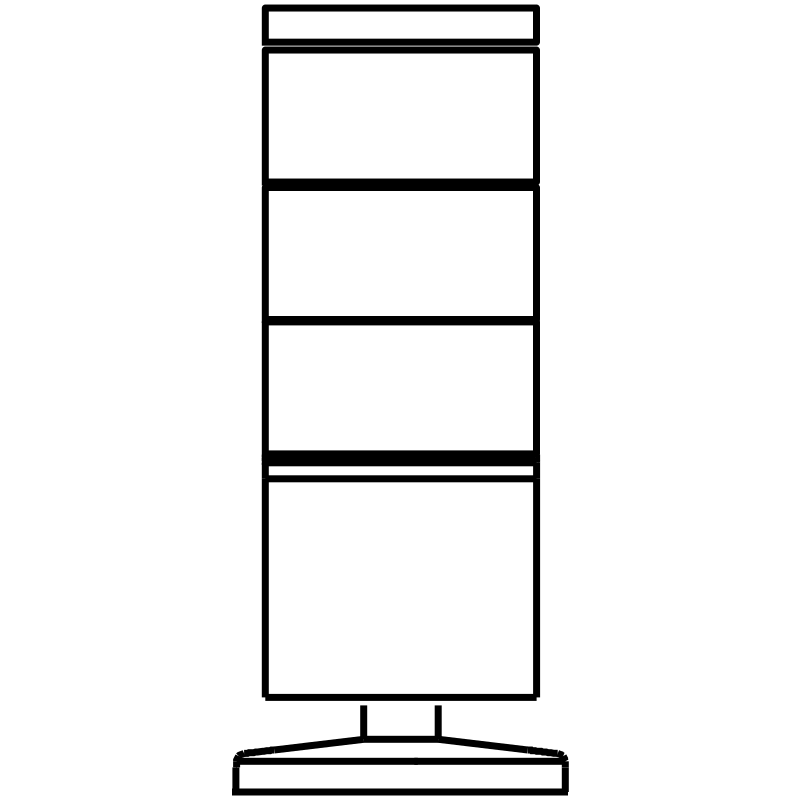
A stack light, also called a tower light, signal tower or Andon light, uses multiple coloured signal modules arranged vertically. Each layer represents a different operating state. This makes stack lights especially useful for automation systems where several statuses must be shown simultaneously or where the status can change frequently.
A three-layer stack light is a common solution for green, yellow and red machine states. Four- and five-layer versions can add blue and white indicators for quality checks, operator calls, maintenance requests, setup mode, production targets or custom conditions.
For a broad overview of available tower-light configurations, visit the Mucco Stack Lights category. Mucco offers different layer quantities, mounting options and configurations to help machine builders create clear visual communication systems.
Quick Decision Guide
| Application Need | Recommended Device Type | Example Use |
|---|---|---|
| One simple visual message | Signal beacon | Red fault indication on a control panel |
| Several machine states | Stack light | Run, waiting, warning and fault states |
| Visual indication plus sound | Warning horn or beacon horn | Conveyor start warning or operator call |
| Large, noisy or open industrial area | Heavy-duty warning light or siren | Plant alarm, crane zone or process equipment warning |
Industrial Signal Light Colour Coding: Build a Consistent Language
A signal device works best when every person in the facility understands what each colour means. The exact colour logic may vary by company, country, machine type or customer specification, but consistency is more important than complexity. Once a colour is assigned to a condition, it should be documented and used in the same way across similar machines.
A common industrial signal-light colour approach is:
- Red: Fault, emergency condition, machine stop, critical alarm or immediate action required.
- Yellow or amber: Warning, attention needed, material shortage, process deviation or upcoming stop.
- Green: Normal operation, machine running, cycle complete or safe operating condition as defined by the machine logic.
- Blue: Operator assistance, quality control, special instruction, material replenishment or a site-specific function.
- White: Power available, setup mode, automatic mode, production target status or another custom function.
Red and yellow are usually reserved for the most urgent states because they are commonly associated with danger, caution and intervention. Green is widely recognized as a normal or permitted state. Blue and white can be valuable additions where a production system requires more detailed communication.
However, colour alone should not carry all the meaning. In a real industrial environment, there may be strong sunlight, reflective surfaces, visual clutter, dust or employees with colour-vision differences. Use light modes, position, labels, HMI messages and standard operating procedures to reinforce the message. A flashing red beacon can indicate a different level of urgency than a steady red beacon, but the meaning should always be documented.
The UK Health and Safety Executive (HSE) provides broader guidance on work equipment safety and risk control. When designing a signalling strategy, your system should be reviewed against the hazards, procedures and legal requirements that apply to the specific machine and workplace.
When Should You Add an Audible Warning Signal?
Visual signals are excellent when people can see the machine or warning zone. But not every worker will have a direct line of sight to a beacon. In noisy production areas, on large sites, around blind corners or during machine start-up, an audible signal may be necessary to support the visual warning.
Audible warnings are commonly used for:
- Conveyor and automated-line start-up alerts.
- Machine fault notifications.
- Crane, loading-bay or vehicle movement warnings.
- Operator call and maintenance request systems.
- Process alarms in utility rooms and technical areas.
- Evacuation, emergency or site-specific alarm systems where appropriate.
Sound should be selected carefully. A louder device is not always a better device. An alarm must be noticeable above ambient noise without causing unnecessary discomfort, alarm fatigue or confusion. Tone selection also matters. If every event uses the same sound, operators may stop responding quickly or may not know whether the event is routine, urgent or critical.
A good strategy is to use different sound patterns for different priorities, then train operators on their meaning. For example, a short intermittent tone may indicate an operator call, while a more urgent pattern may be used for a machine alarm. The final choice must suit the risk assessment, local noise level and applicable regulations.
Mucco’s Warning Horns category includes visual and audible solutions for applications that need both light and sound. For a compact combined option, the Mucco Warning Horn family combines a visual lens with an audible alert in one industrial enclosure.
How to Select the Right Industrial Warning Device
Choosing an industrial beacon or stack light should not be based only on appearance or price. The correct device depends on the machine, environment, control system and required message. Before selecting a product, answer the following questions.
1. How Many Machine States Must Be Displayed?
Start by listing every condition that needs to be communicated. A simple machine may only need “normal” and “fault,” while an automated production line may need “running,” “waiting,” “material low,” “quality hold,” “maintenance request” and “fault.”
Use a single beacon for a simple one-state indication. Use a two- or three-layer stack light for basic operation status. Use four or five layers when the machine requires more advanced visual management. Avoid adding colours without a clear reason. Too many signals can make the system harder to understand.
2. What Voltage Is Available?
Confirm the output voltage and signal type of the PLC, relay, control panel or machine circuit. Many industrial applications use 24V AC/DC, while others use wider AC/DC voltage ranges. A mismatch between the control voltage and signal device can cause failure, poor performance or damage.
Mucco products are offered in different voltage options depending on the model. Always review the product page and technical documentation for the selected configuration before purchase and installation. For example, the 90 系列信号灯 offers 12-24V AC/DC and 85-250V AC/DC options, while the ESP 系列重型警示灯 is available in 12-30V AC/DC, 48V AC/DC and 85-250V AC/DC alternatives.
3. How Far Away Must the Signal Be Seen?
A small signal light may be sufficient for a local machine-control panel. A large production hall, outdoor installation or high mounting point may require a larger lens, higher light output or a more visible flashing mode. Consider the normal viewing distance, installation height, ambient light and the number of obstructions between the device and the operator.
For wider visibility, the lens diameter and mounting position are important. A 90 mm or 100 mm beacon may be appropriate for many standard industrial applications, while a heavy-duty unit can be more suitable for large-scale equipment or demanding sites.
4. Does the Environment Require Extra Protection?
Industrial environments can include dust, water, oil mist, vibration, temperature changes, UV exposure, chemicals or physical impacts. The protection level and enclosure material should match the real working conditions rather than ideal indoor conditions.
Look for details such as IP protection rating, operating temperature range, body material, lens material and available protection accessories. Mucco’s 90 Series and ESP Series product pages list IP65 protection for their relevant configurations. If the device will be exposed to possible impact, consider a model with a protection cage, such as the 90 Series Signal Beacon with Protection Cage.
5. Is Sound Required?
Consider whether visual indication is enough. If personnel can be away from the equipment, if the process is safety-sensitive, or if start-up warnings are needed, a combined visual and audible device may be a better fit. The sound intensity, tone options and local noise level should all be reviewed before making a decision.
6. What Mounting Method Is Best?
Signal devices can be mounted directly on top of a machine, on a side wall, on a pole, on a pipe, on a panel or on a dedicated stand. The device should be installed where it can be seen without forcing workers to stand in an unsafe position or move into a hazardous area.
Wall-mounted tower lights are particularly useful where top mounting is not possible. The Mucco Wall Stack Lights With Three Layer 30cm option is designed for installations where a clearly visible elevated status indication is needed along a machine side, wall or production area.
7. How Will the Device Be Controlled?
Verify whether each colour and sound function will be controlled by a separate PLC output, relay contact, dry contact, transistor output or a dedicated control module. The wiring plan should identify the required inputs before the product is selected.
In modular systems, the number of layers usually affects the number of control connections required. Confirm cable entry, connector type, wire length, pin assignment and control logic during the design phase. This avoids unexpected changes during machine commissioning.
Recommended Mucco Signal Product Families
Mucco Signal offers product families for both compact machine installations and demanding industrial applications. The correct choice depends on the desired communication method, voltage, mounting style and environmental conditions.
50 Series Modular Stack Lights
Modular tower lights are useful when a machine builder needs a configurable solution. The 50 Series Modular Stack Light is part of a modular signalling family that can be selected for different layer quantities and warning requirements. It is a practical option for compact automation machines, packaging equipment, assembly stations and machine-control applications.
A modular approach can make it easier to match the number of status indicators to the machine logic. A single layer can be used for a simple alarm. Additional layers can support run, warning, fault, quality and operator-call functions.
70 系列迷你信号灯
Where installation space is limited, a smaller beacon can provide a clear local indication without adding unnecessary size. The 70 系列迷你信号灯 is suitable for compact equipment, panels and machine locations where a smaller-diameter warning solution is preferred.
Mini signal beacons are often used as local indicators near operator stations, access doors, small automated cells and individual process points. Their compact form can be especially useful when the machine design has limited mounting space.
90 系列信号灯
The 90 系列信号灯 is a versatile industrial warning-light solution with different lens colours, LED options, light modes and voltage alternatives. Depending on the selected configuration, it can be used for steady, flashing, rotary, strobe and other visual-warning patterns.
With a 90 mm lens diameter, this family is a strong choice for machine builders and industrial facilities that need a visible, durable beacon for standard factory environments. Available buzzer options also make it possible to create a combined visual and audible warning point where needed.
100 系列信号灯
For applications that require a larger signal body, the 100 系列信号灯 provides another robust visual and audible signalling option. The family includes lens colour, LED, buzzer and voltage alternatives, allowing buyers to select a configuration that fits their machine or project requirements.
The 100 Series can be considered for machine enclosures, production equipment, technical installations and areas where a larger lens can improve visibility. As with all warning devices, the exact model should be selected after checking the application voltage, desired light mode and sound requirement.
ESP 系列重型警示灯
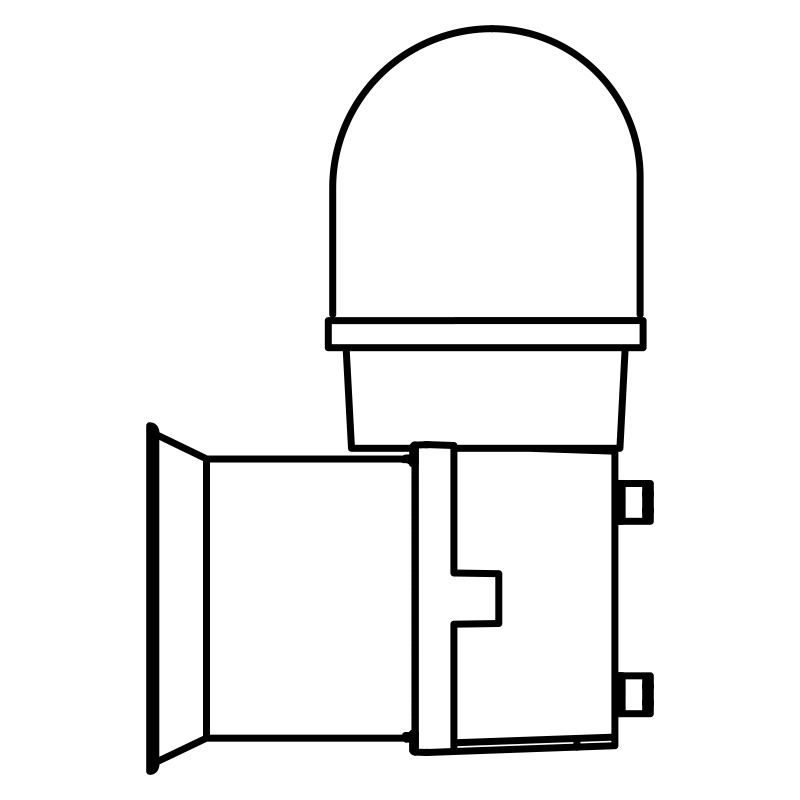
Heavy-duty applications need a warning device that can communicate clearly across larger or more demanding industrial areas. The ESP 系列重型警示灯 is designed for applications that require strong visual and audible performance.
The ESP Series offers flashing, steady and strobe light modes, multiple voltage options and seven wire-controlled tones. Its listed sound intensity range of 125-133 dB at one metre makes it suitable for selected high-noise applications, subject to correct engineering review, risk assessment and local sound-level considerations. Typical uses can include heavy machinery, process areas, plant alarms, loading areas and large industrial equipment.
Warning Horns and Combined Signalling
When a single device must provide both light and sound, Mucco warning horns offer an efficient solution. These products can help simplify installation while ensuring that an event is seen and heard. They are suitable for conveyor warnings, machine alarms, production calls and industrial areas where attention must be gained quickly.
Explore the full Mucco Warning Horn range to compare options for voltage, lens colour, tone requirement and application type.
Applications for Industrial Signal Beacons and Stack Lights
Automation Machines
Automated assembly machines often require simple but immediate status communication. A stack light can tell an operator whether the machine is running, waiting for parts, requiring a quality check or stopped due to a fault. This reduces the need for continuous manual monitoring and allows one operator to oversee several machines more effectively.
CNC Machines and Machine Tools
CNC machines can use signal lights to show cycle running, cycle complete, alarm status, setup mode or operator intervention. The signal should be mounted high enough to be visible from the working aisle, while cables and mounting hardware should be protected from coolant, chips, vibration and accidental impact.
Packaging and Filling Lines
Packaging systems frequently stop because of material shortages, film breaks, label errors, product jams or downstream congestion. A standard colour strategy can help operators distinguish between a routine material refill and a fault that requires maintenance. A warning horn can also be useful for start-up notices or urgent line stoppages.
Conveyor Systems
Conveyors often need a clear pre-start warning. Visual and audible signals can alert nearby personnel before movement begins. In long conveyor systems, multiple devices may be installed at key zones so the warning is visible and audible throughout the relevant area.
Warehouses and Loading Areas
Signal beacons are useful at dock doors, loading bays, forklift routes, automated storage systems and restricted-access areas. A beacon can indicate that a dock is active, a gate is open, a vehicle is moving or a process is waiting for attention. In these environments, mounting height and physical protection are especially important.
Process Equipment and Utility Rooms
Pumps, tanks, filtration systems, gas systems, compressors and utility equipment can benefit from simple local status indication. Green may indicate normal operation, yellow may indicate a condition requiring observation, and red may indicate a fault or shutdown. The control logic should be designed by qualified personnel according to the actual process requirements.
Andon and Lean Manufacturing Systems
In lean manufacturing, an Andon system gives employees a practical way to call attention to a production issue. A stack light can display a request for material, support from a supervisor, maintenance assistance or quality control. The value of the system comes not only from the light itself but from the response process behind it. Every signal should trigger a clear action and a defined owner.
Installation and Maintenance Considerations
Correct installation is as important as choosing the correct product. A high-quality beacon mounted in the wrong location may not deliver the intended benefit. Consider the following points during installation.
- Mount the device where it can be seen from normal operator and supervisor positions.
- Avoid placing the signal directly behind structural columns, cable trays or machine guards.
- Use the correct voltage and follow the wiring diagram for the selected product configuration.
- Protect cable routing from heat, vibration, sharp edges, moving parts and mechanical damage.
- Choose a mounting position that allows safe inspection and maintenance.
- Use protection cages or additional mechanical protection where impact is likely.
- Test every colour, flash mode and audible function during machine commissioning.
- Document the meaning of each signal in the machine manual and operator training materials.
Maintenance should include regular visual checks for lens damage, dirt accumulation, loose mounting hardware, cable damage and reduced light output. In dusty or oily environments, clean the lens according to the manufacturer’s recommendations. Do not use aggressive chemicals that may damage plastic lenses or seals.
It is also wise to test audible devices periodically. A horn or siren may still receive power but be less effective if it is blocked, damaged or masked by changes in the surrounding noise environment. Any change in production layout, machinery or noise level should trigger a review of the warning system’s effectiveness.
Common Mistakes to Avoid When Using Industrial Warning Lights
Using Inconsistent Colour Meanings
If red means “fault” on one machine but “running” on another, confusion is inevitable. Establish a facility-wide colour policy wherever possible. Use local exceptions only when they are clearly documented and justified.
Installing the Device Too Low
A warning light hidden behind a machine enclosure or operator workstation cannot perform its job. The signal should be positioned for visibility from the relevant work area, aisle or control point.
Ignoring Ambient Light
Bright daylight, reflective metal surfaces and high-bay lighting can reduce perceived visibility. Check the signal in real operating conditions, not only during installation or in a dim workshop.
Choosing Sound Without Considering Noise Levels
A sounder that is too quiet may not be heard. One that is unnecessarily loud can create stress, noise exposure concerns and alarm fatigue. Select sound output and tone patterns for the actual environment.
Using Warning Devices as a Substitute for Safety Controls
Warning devices communicate information; they do not eliminate hazards. They should work alongside guarding, interlocks, emergency-stop systems, procedures, training and risk-control measures.
Failing to Test the Complete Logic
Do not only test whether the light turns on. Test every machine scenario: normal running, warning, material shortage, fault, emergency condition, restart and power restoration. Verify that the displayed signal matches the real machine condition.
Frequently Asked Questions About Industrial Signal Beacons and Stack Lights
What is the difference between a stack light and a signal beacon?
A signal beacon usually provides one visual indication, while a stack light has multiple coloured layers for displaying several machine or process states. A beacon is ideal for simple alerts; a stack light is better for detailed machine-status communication.
Which colour should be used for a machine fault?
Red is commonly used for a machine fault, stop condition or urgent alarm. However, your facility should define and document its own colour standard based on the machine, process and applicable safety requirements.
Should I use a horn together with a warning light?
Use an audible signal when people may not see the light, when the warning must be noticed quickly, or when the application requires a start-up or alarm sound. The selected sound level and tone should be appropriate for the surrounding environment.
Can stack lights be connected to a PLC?
Yes. Industrial stack lights are commonly controlled by PLC outputs, relays or control circuits. The exact connection method depends on the product configuration, voltage and number of independently controlled functions.
Which Mucco product is suitable for a compact machine?
For compact machinery, consider the 70 系列迷你信号灯 or the 50 Series Modular Stack Light, depending on whether you need a single signal or multiple status layers.
Which Mucco product is suitable for a heavy-duty area?
For demanding applications that require a larger visual and audible warning solution, review the ESP 系列重型警示灯 and confirm that its voltage, light mode, sound level and protection features suit your project.
Choose the Right Signal Solution for Your Machine
A well-designed industrial signalling system makes a factory easier to operate, easier to monitor and easier to maintain. Whether you need a compact beacon for a control panel, a multi-layer stack light for an automated machine, a combined light-and-horn device for a conveyor, or a heavy-duty warning solution for a large industrial area, the key is to match the device to the real application.
Start with the machine states you need to communicate. Define a consistent colour logic. Review voltage, mounting, protection level, visibility distance and sound requirement. Then select the right solution from Mucco’s product range.
Explore Mucco 堆积灯, 90 Series Signal Beacons, 100 Series Signal Beacons, 警示喇叭 和 ESP Heavy Duty Warning Lights to find the most suitable industrial signalling solution for your project.