












堆叠式信号灯:工业LED信号塔和安东灯完全指南
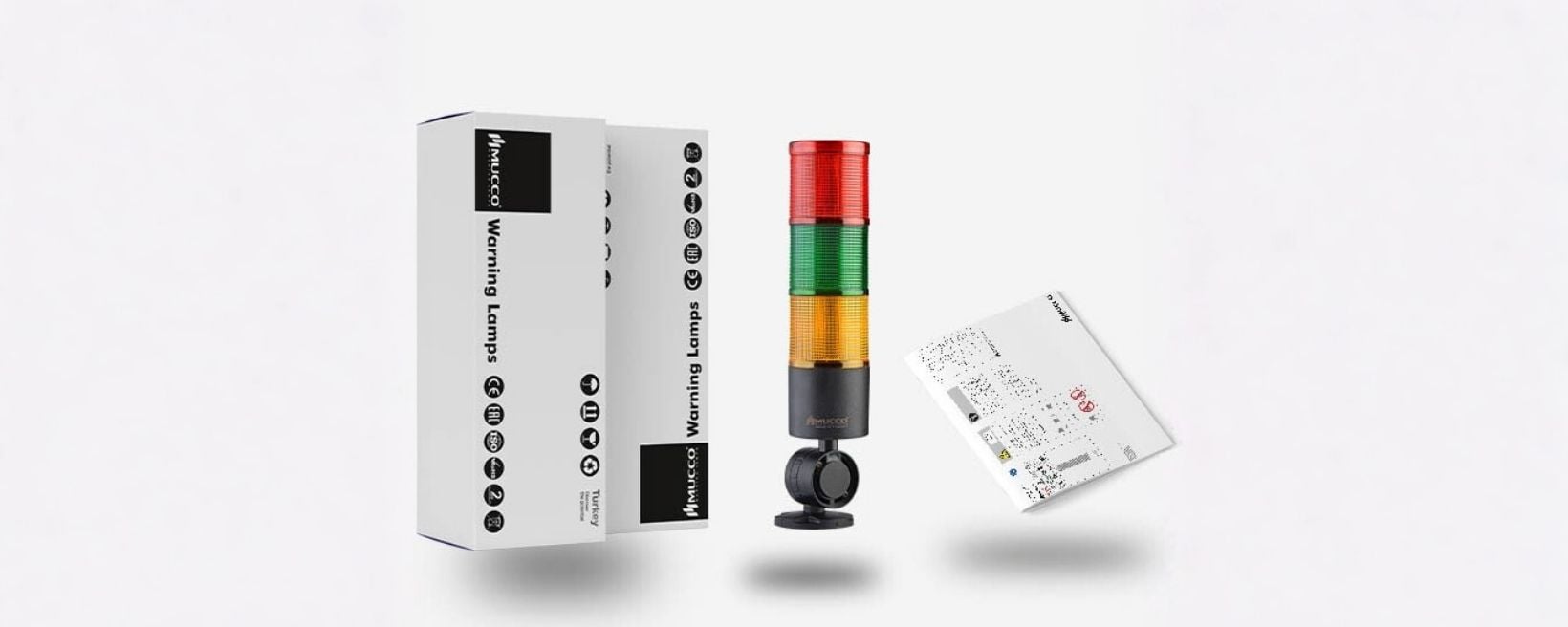
堆栈灯 是现代工厂、自动化生产线和工业机械中使用最有效的视觉通信设备之一。通过将多个彩色LED模块组合成垂直塔状结构,堆叠式信号灯使操作员、维护团队和生产经理能够从远处了解机器的状态。.
绿色段可能表示生产正常,黄色段可能提示需要关注,红色段则可能表明机器已停止运行。 此外,蓝色、白色或发声模块可传达维护请求、物料短缺、质量检查及其他工艺状态。由于信息即时且醒目,工业堆叠灯可帮助团队更快地做出反应,而无需反复查看人机界面(HMI)或直接走到控制面板前。.
Mucco 提供种类繁多的 工业堆叠式信号灯和模块化信号塔 具有不同的层数、安装方式、电压范围、灯光模式和声音报警配置。本指南将介绍堆叠式信号灯的定义、工作原理、颜色含义,以及如何为您的机械设备选择合适的LED信号塔。.
本指南内容如下:
什么是堆栈灯?
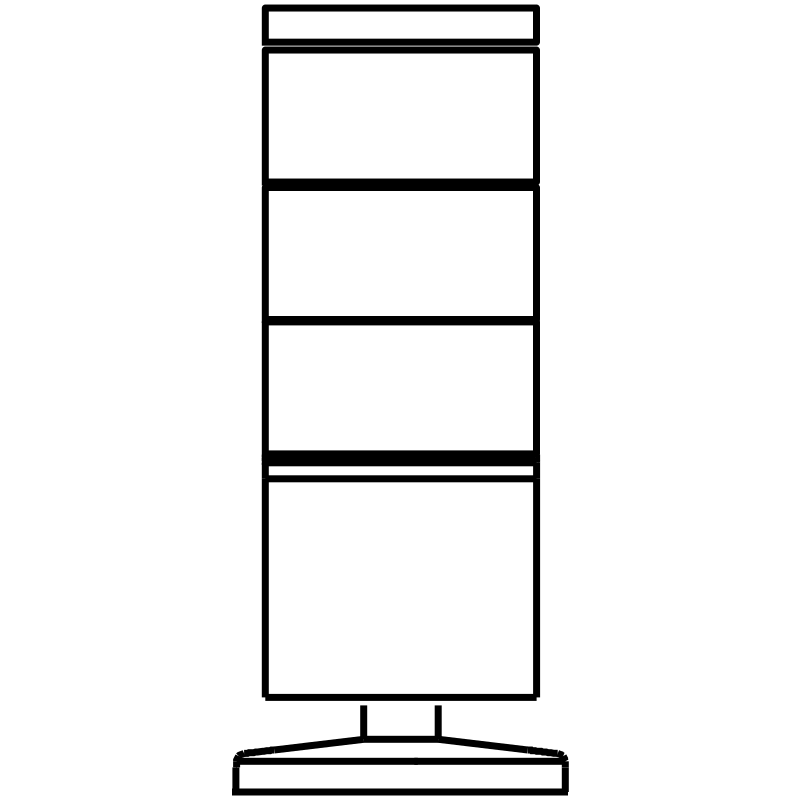
堆叠式信号灯是一种由一个或多个发光段垂直堆叠而成的信号装置。每个发光段通常可独立控制,从而使信号灯塔能够显示不同的机器或工艺状态。.
堆叠式信号灯通常也被称为:
- 信号塔灯
- 工业塔式警示灯
- 机器状态指示灯
- 安东灯
- 指示灯塔
- 可堆叠信号灯
- 塔式堆叠灯
- 工业信号灯
尽管制造商和各国可能使用不同的术语,但这些产品具有相似的功能:它们将电气控制信号转换为清晰的可视或视听信息。.
典型的工业堆叠式信号灯包含红色、黄色和绿色模块。更先进的系统可能还包括蓝色和白色模块、闪烁或频闪模式,以及内置蜂鸣器。各个模块分别连接到PLC输出端、继电器、开关、传感器或其他机器控制器。.
当机器状态发生变化时,控制系统会启动相关部分。这样,操作员无需打开控制柜或查看详细的诊断屏幕,即可了解设备的运行状况。.
堆叠灯、信号塔灯和安东灯是一样的吗?
这两个术语虽然密切相关,但可能描述的是略有不同的应用场景。.
堆叠式信号灯 这是指包含多个彩色信号模块的信号塔最常用的通用术语。在产品搜索和技术文档中,也常使用“stacklight”、“stacklights”和“stack light”等变体形式。.
信号塔灯 或 工业信号塔灯 强调了塔体的实体结构及其信号传输功能。.
安东灯 通常指作为安东(Andon)系统或可视化管理系统的组成部分而使用的堆叠式信号灯。在此应用中,操作人员可通过激活信号灯来请求协助、物料、维护支持或质量检查。.
机器堆叠灯 通常指直接安装在数控机床、包装机、机器人工作站、输送机或其他生产设备上的装置。.
实际上,同一盏LED灯塔既可作为机器状态指示灯、安东灯,也可作为生产警告指示灯使用。关键的区别不在于产品的名称,而在于触发每种颜色的逻辑。.
对于工作站和视觉制作系统,请了解 Mucco 的 安东套件堆叠式信号灯解决方案. 如需了解可视化管理的详细说明,您还可以阅读我们的指南: 工业安东系统与可视化管理.
工业堆叠灯为何重要?
工业流程会产生大量信息。温度、压力值、循环时间、报警、传感器状态和产量等数据都可能显示在设备界面上。然而,站在几米之外的操作员无法持续监控每一块屏幕。.
堆叠式信号灯将这些信息简化为一种简单直观的视觉信号,便于快速识别。在工厂中,当一名员工需要同时监管多台机器,或者维护人员必须从生产区域的另一端确定警报来源时,这种信号灯尤其有用。.
一个设计合理的堆垛照明系统可以支持以下几个运营目标:
- 更快的故障识别: 红色或闪烁的指示灯有助于工作人员快速定位已停止运行的设备。.
- 提高生产可视性: 主管可以查看机器是正在运行、处于等待状态还是已停止。.
- 标准化沟通: 统一的颜色可减少不同机器和生产区域之间的混淆。.
- 减少不必要的动作: 员工无需走到每台人机界面(HMI)前去查看机器的基本运行状态。.
- 更及时的维护响应: 可以为技术支持请求分配蓝色或白色的模块。.
- 对可视化管理的支持: 安东灯能在异常发生时,在发生地点将其显现出来。.
堆叠式警示灯应被视为通信设备,而非物理防护装置。它们虽可提高操作人员的警觉性,但不能替代防护装置、互锁装置、紧急停止系统或机器风险评估所要求的其他防护措施。该 美国职业安全与健康管理局(OSHA)关于机械防护的指导意见 提供了关于保护员工免受机械危害的有用背景信息。.
堆叠式信号灯的颜色含义及常见颜色标准
关于信号塔最常被问到的问题之一是: 堆叠式信号灯的颜色分别代表什么?
没有一种通用的颜色序列能自动适用于所有工厂。每种颜色的含义应根据设备设计、风险评估、公司规程及适用标准进行记录。尽管如此,工业自动化领域仍普遍采用几种常见的约定。.
| 颜色 | 常见含义 | 典型示例 |
|---|---|---|
| 红色 | 危险、严重故障或停止状态 | 紧急状况、安全故障或停产 |
| 黄色或琥珀色 | 警告或异常状况 | 物料不足、温度升高或需注意 |
| 绿色 | 正常或令人满意的状态 | 机器运行正常或已准备就绪 |
| 蓝色 | 强制性行动或协助请求 | 请求提供维护、物料或操作员支持 |
| 白色或透明 | 中立或用户自定义信息 | 质量检查、设置模式或自定义生产状态 |
该 IEC 60073 标准 规定了视觉、听觉和触觉指示器及执行器的通用编码原则。设备制造商应查阅相关标准,并为其设备制定书面色彩设计理念。.
一致性比尽可能多地使用颜色更为重要。如果某条生产线上红色表示“设备故障”,而在另一条生产线上却表示“需要物料”,工作人员可能会犹豫不决或做出错误反应。因此,全厂范围内的信号灯颜色标准应明确规定:
- 每种颜色的含义
- 每种颜色是常亮还是闪烁
- 哪些情况会触发声音警报
- 谁负责回应
- 信号如何重置
- 多种颜色能否同时运行
您需要多少层堆叠式信号灯?
堆叠式信号灯通常有1至5层发光层可供选择。选择正确的层数有助于保持信号清晰,同时为具体应用提供足够的信息。.
单层堆叠灯
当只需显示一个重要状态时,单层堆叠式信号灯是合适的选择。例如,仅显示红光的信号灯可能表示设备故障、通道被阻或工艺报警。.
这些紧凑型或微型堆叠式指示灯配置常用于小型机器、测试设备、控制面板和简单的工作站。查看可用产品 单层堆叠灯.
双层堆叠灯
对于基本状态指示而言,双层塔是一种实用的选择。常见的组合包括:
- 绿灯表示可以通行,红灯表示停止
- 绿色表示可用,黄色表示需注意
- 红色表示报警,蓝色表示请求协助
Mucco's 双层堆叠灯 提供多种安装和延长选项。.
三层堆叠式警示灯
红、黄、绿三层配置是工业自动化领域中最易识别的布局之一。它能在不增加不必要复杂性的情况下,分别表示正常运行、警告和故障状态。.
三层LED堆叠灯通常适用于数控设备、包装机械、输送机、装配工位和机器人工作站。浏览 三层堆叠式信号灯型号.
四层堆叠式警示灯
当机器除了标准的红、黄、绿三种状态外,还需要传达操作员呼叫、维护请求、质量暂停或特殊生产模式时,第四层就派上了用场。.
例如,蓝色可能表示操作员已请求维护,而其余颜色则继续显示机器状态。参见 四层工业堆叠灯.
五层堆叠式警示灯
五层堆叠式信号灯可提供最多的独立控制视觉状态。它们在复杂的生产系统中非常有用,但每一层都应具有明确且必要的用途。.
同时显示的颜色过多会使塔楼状态难以辨识。当人员确实需要多个独立的状态类别时,请采用五层系统。探索 五层信号塔.
模块化堆叠灯与预配置堆叠灯的对比
另一个重要决定是选择模块化堆叠式信号灯还是预配置的信号灯塔。.
模块化堆栈灯
模块化堆叠式信号灯由独立的机身、灯体、蜂鸣器和安装部件组装而成。根据产品系列的不同,可根据设备要求调整模块的数量和排列顺序。.
在以下情况下,模块化设计尤为重要:
- 机器需要不同的颜色组合
- 预计未来将进行扩建
- 损坏的模块应单独更换
- 需要不同的蜂鸣器或安装选项
- 一个产品平台将应用于多种机型
Mucco's 50 系列模块化堆叠式信号灯产品系列 包括独立的指示灯、蜂鸣器和安装组件。部分型号还支持 M12 连接器,有助于设备制造商建立可重复且便于维护的连接。.
例如,该 50 系列三层模块化堆叠灯,配备 M12 8 针连接器 该产品提供多种电压和蜂鸣器选项。其紧凑的设计适用于对空间、快速连接和灵活配置有较高要求的机械设备。.
预配置或固定式堆垛灯
预配置的堆叠式信号灯以规定的层级排列方式提供。当机器设计已实现标准化且预计未来无需重新配置时,这可能是最有效的选择。.
固定式堆垛灯可简化重复性生产中的型号选择。Mucco 提供表面安装型、壁挂型和可折叠底座型等多种配置,并配有不同长度的伸缩杆。其中一个例子是 带延长管的表面安装式四层堆叠灯.
最佳方案取决于设备的生命周期。模块化信号灯塔可降低长期备件管理的复杂性,而预配置信号灯则可为稳定的设计提供简便的解决方案。.
为什么LED堆叠灯已成为工业标准
早期的信号灯塔有时会使用白炽灯或其他可更换的光源。如今,大多数现代工业堆叠式信号灯都采用了LED技术,因为LED具有以下几项实际优势:
- 使用寿命长
- 低能耗
- 快速响应
- 对反复开关的耐受性
- 紧凑型结构
- 色彩鲜明且饱和
- 减少了更换灯泡的需求
LED 堆叠式警示灯可长时间运行,无需像老式技术那样定期更换灯泡。当警示灯塔安装在大型机器上方或难以触及的区域时,这一点尤为重要。.
LED 还支持多种信号模式。根据型号不同,同一款工业旋转警示灯可提供常亮、闪烁、旋转式或频闪效果。所选模式应与情况的紧急程度相匹配,同时避免造成不必要的视觉干扰。.
稳定的绿灯通常表示运行状态正常。闪烁的黄灯可能表示临时警告,而闪烁的红灯和声音警报则可能用于提示更紧急的故障。.
选择 24V、110V、120V 或高压堆叠式信号灯
在选择堆叠式信号灯时,供电电压是最重要的技术规格之一。所选电压必须与机器控制系统以及用于激活模块的输出设备兼容。.
24V 堆叠式警示灯
A 24V 堆叠式指示灯 它常用于工业自动化领域,因为许多PLC、传感器、继电器和控制电路都是以24V直流电工作。低压控制还简化了与晶体管输出和分布式I/O模块的集成。.
在以下情况下,24V直流堆叠式警示灯可能是首选:
- PLC 输出 24V 直流电源或进行开关控制
- 信号塔直接安装在机器上
- 控制柜中已配备一个24V电源
- 需要快速的半导体开关
- 该设备制造商希望采用统一的控制电压
请务必确认产品是仅支持直流(DC)还是同时支持交流(AC)和直流(DC)。仅凭额定电压无法确定极性、内部保护功能或与特定PLC输出的兼容性。.
110V 和 120V 堆叠式指示灯
在以 110V 或 120V 为标准控制电压的机器和设施中,可使用 110V 或 120V 的堆叠式指示灯。这些型号常被选用于改造项目或基于继电器输出的控制系统。.
在连接 110V 堆叠式警示灯之前,请核实技术文档中列出的确切电压范围、频率、功耗和布线要求。.
220V、230V 和宽电压范围堆叠灯
当无法获得本地低压电源,或者现有设备已采用符合市电标准的控制电路时,高电压型号可能更为实用。.
某些工业堆叠式指示灯采用宽输入电压范围,例如 40–250V AC/DC 或 85–250V AC/DC。宽电压范围的产品可以简化面向不同市场销售设备的机械制造商的库存管理。不过,开关元件、电缆和安装方式仍必须符合该应用的额定要求。.
只有合格人员才应设计和进行电气连接。产品数据表、当地电气规范以及完整的机器安全设计,其优先级始终应高于一般的布线示例。.
何时应使用带声音的堆叠式警示灯?
当工作人员能够看到信号塔时,视觉信号的效果最佳。在大型生产车间中,员工可能正面向其他方向、在围挡后工作,或者正在监控多台机器。配备声音警报的信号灯即使在视觉指示灯位于直接视野范围之外时,也能吸引注意。.
带声音的堆叠式警示灯 适用于:
- 关键设备故障
- 循环完成通知
- 装配工位的物料需求
- 过程超时报警
- 维修服务请求
- 操作员在多台机器之间移动的区域
应结合安装地点的背景噪声来评估声级。在办公室里听得很清楚的蜂鸣器,在压缩机、压力机或加工设备旁边可能就很难听见了。.
与此同时,声音越大并不一定越好。过响或持续响起的警报会引起不适并导致警报疲劳。警报的声音模式、强度和持续时间应能传达紧迫感,同时又不至于沦为司空见惯的背景噪音。.
请考虑以下问题:
- 哪些情况既需要光又需要声音?
- 工作人员能否确定是哪台机器触发了警报?
- 在确认后,声音是否应停止,而指示灯仍保持亮起状态?
- 脉冲音比连续音更容易辨认吗?
- 环境噪音是否需要配备一个单独的高音量警示喇叭?
对于非常嘈杂的环境,应单独使用 LED 警报喇叭 或者,工业用声光报警装置可能比紧凑型集成蜂鸣器更合适。.
安装方式、观看距离与环境保护
即使是最亮的堆叠灯,如果被藏在机柜后面、安装在操作员正常视线以下,或者被移动设备挡住,也无法发挥良好作用。应在机器设计阶段就考虑其安装位置,而不是等到设备完工后再考虑。.
表面安装
表面安装式堆叠灯直接安装在机器或机柜顶部。它们外观紧凑,适用于安装表面在工作区域内已可见的情况。.
管式或延长杆式安装
延长管将信号塔抬高至机身之上,有助于信号在防护罩、门和附近设备上方保持可见。可根据机器高度和视角选择不同长度的延长管。.
壁挂式或侧挂式
借助壁挂支架,信号塔可安装在机柜、立柱或机器机架的侧面。当没有合适的水平安装面时,此方法非常实用。.
可折叠底座安装
可折叠底座有助于在运输过程中或在可能发生意外碰撞的区域保护堆叠式警示灯。此外,它还能简化设备制造商在发货时对整机设备的包装流程。.
在评估环境条件时,应结合安装方式一并考虑。重要因素包括:
- 灰尘和空气中的颗粒物
- 喷水及清洁程序
- 湿度和冷凝
- 油雾和化学物质接触
- 环境温度
- 直射阳光和紫外线辐射
- 振动和机械冲击
请查阅产品的IP防护等级和制造商文档,不要想当然地认为每款可堆叠灯具都具有相同的防护等级。Mucco发布了相关 证书、声明和测试文件 用于其信号传导产品系列。.
工业堆叠灯应用在哪些领域?
工业堆叠式信号灯适用于任何需要人员快速识别设备状态的场合。其简单的控制原理使其既能与新型自动化系统配合使用,也能与老旧机械配合使用。.
数控机床和普通机床
机床堆叠指示灯可显示数控程序是正在运行、暂停、已完成还是因故障而停止。维护人员无需逐一检查每个控制屏幕,就能从车间另一端识别出停机的机床并及时响应。.
包装和灌装生产线
包装设备可使用LED堆叠灯来指示物料不足、防护罩打开、输送带卡料、次品或批次完成等情况。当需要操作员立即采取行动时,可加装蜂鸣器。.
装配线和安东工位
安东灯使操作员无需离开工作岗位即可请求物料、技术协助或质量支持。该信号可通过按钮、拉绳、传感器、PLC 或生产管理系统触发。.
机器人单元
机器人单元可通过信号塔传达自动模式、手动模式、循环运行、待机状态或安全相关停机等信息。颜色逻辑应与整个单元的设计及操作说明相一致。.
注塑成型与工艺机械
工业堆叠式信号灯可指示加热、就绪、生产、冷却和报警状态。其宽广的视角有助于员工监控同一生产区域内的多台设备。.
输送机与物料搬运
信号塔灯常用于显示输送机的运行状态、堵塞、过载或紧急停止状态。根据系统设计要求,在设备启动或重启前,声光信号可对人员发出警告。.
仓库和物流设施
堆叠式信号灯可集成到分拣设备、自动化仓储系统、装载站和拣货工作站中。不同颜色可分别表示“可用”、“处理中”、“已满”、“等待”或“故障”状态。.
实验室和测试设备
微型堆叠式指示灯可在测试台、检测系统和实验室设备上提供清晰的状态指示,且无需占用标准工业塔式指示灯所需的空间。.
建筑与设施系统
堆叠式灯具还可显示泵、发电机、门禁系统、暖通空调设备或公用设施控制系统的运行状态。在这些应用中,所选的外壳和防护等级应与环境相匹配。.
如需查看更多示例,请访问 Mucco’s 工业信号应用 和 服务行业 页。.
精益制造与可视化管理中的堆叠灯
可视化管理旨在让人们无需详细报告即可了解流程的当前状况。堆叠灯通过在异常发生处显示异常信息,有助于实现这一目标。.
在安东系统中,一个工作站可能使用:
- 绿色表示生产正常
- 黄色表示问题正在出现
- 红色表示生产已停止
- 点击蓝色按钮以索取资料或申请维护
- 怀特将申请质量检查
信号本身并不能解决问题。它的价值源于围绕它建立的响应流程。一个成功的安东系统应明确规定由谁接收呼叫、应以多快的速度响应,以及如何记录根本原因。.
因此,如果在未明确职责的情况下安装塔式信号灯,往往收效甚微。在部署安东(Andon)信号灯系统之前,请记录以下内容:
- 运营商可上报的情况
- 负责各项条件的个人或部门
- 预计响应时间
- 递增法
- 复位和确认程序
- 应记录哪些数据以促进改进
堆叠式信号灯与工业4.0
堆叠式信号灯虽然是简单的设备,但在互联制造中仍能发挥作用。可编程逻辑控制器(PLC)和监控系统可以记录用于触发信号灯模块的相同信号,从而使工厂能够分析设备的可用性、等待时间、故障情况以及响应性能。.
对于那些没有现代通信接口的老旧设备,也可以通过外部传感器或机器视觉系统进行监控。关于该领域的学术研究 工业信号灯的检测与分类 has demonstrated how camera systems can identify the operating condition represented by factory signal towers under specified test conditions.
This creates a practical bridge between visual factory communication and digital production monitoring. The stack light remains useful to employees on the factory floor while the underlying signal data can be transferred to dashboards, maintenance systems or production databases.
Basic Stack Light Wiring and Control Concepts
The exact wiring method depends on the product model. Some stack lights use individual wires for each color, while modular products may use terminal blocks, connectors or dedicated body modules.
A common arrangement includes:
- One common supply connection
- One control connection for each light module
- One additional connection for the buzzer
Each PLC output, relay contact or switch activates a corresponding section. Depending on the product design, the controller may switch the positive supply, negative supply, phase or neutral conductor.
Before installation, confirm:
- Nominal and permitted voltage range
- AC or DC compatibility
- Required polarity
- Maximum current consumption
- Common-positive or common-negative wiring
- Connector pin assignment
- PLC output type and current capacity
- Need for an interface relay
- Fuse or circuit protection requirements
- Cable length and conductor size
Do not determine the wiring method from wire colors alone. Always use the specific wiring diagram supplied for the selected product.
How to Choose the Right Stack Light
Use the following checklist when comparing industrial stack lights:
1. Define the Conditions to Display
Write down every status that personnel genuinely need to see. Normal operation, standby, warning, fault, material request and maintenance request are common examples.
2. Assign the Colors
Use a documented color scheme that is consistent with the rest of the facility. Avoid assigning several unrelated meanings to the same color.
3. Select the Number of Layers
Choose one to five layers according to the required status information. Do not add layers that have no defined purpose.
4. Choose Modular or Preconfigured Construction
Select a modular stack light when flexibility and replaceable modules are important. Choose a fixed configuration for standardized machinery with stable requirements.
5. Confirm the Supply Voltage
Match the signal tower to the PLC, relay system or local supply. Confirm whether the product supports 24V DC, 12–24V AC/DC, 110V, 120V, 220V or a wide industrial input range.
6. Decide Whether Sound Is Required
Measure or estimate the background noise and determine which alarms require an audible signal. Consider whether a compact buzzer or separate warning horn is more appropriate.
7. Select the Light Mode
Use steady light for normal or persistent information. Reserve flashing and strobe modes for conditions that require increased attention.
8. Choose the Mounting Method
Check the available surface, viewing angles and risk of impact. Select direct surface, extension tube, wall bracket or foldable-base mounting.
9. Review the Environment
Confirm the IP protection, temperature range, lens material and resistance to dust, water, UV exposure or chemicals.
10. Check Visibility
Consider machine height, ambient lighting and viewing distance. A compact tower may be sufficient for a workstation, while a larger industrial stack light may be needed in a wide production hall.
11. Review Service and Spare Parts
Check whether light modules, buzzers, connectors, bases and brackets can be replaced separately. Standardizing one modular family across machines can simplify spare-parts inventory.
12. Verify Documentation
Review technical datasheets, wiring diagrams, dimensions, certificates and declarations before finalizing the machine design.
Common Stack Light Selection Mistakes
Avoiding a few common mistakes can significantly improve the effectiveness of a signal tower system.
Using Too Many Colors
More layers do not automatically create a better system. If operators cannot remember the meaning of each color, the tower becomes decorative rather than informative.
Using Different Meanings on Similar Machines
Color definitions should remain consistent whenever possible. Employees should not have to relearn the signal logic every time they move to another line.
Installing the Light Where It Cannot Be Seen
Check visibility with doors open and closed and with employees standing at their actual working positions. Nearby machines, racks and guards may block the signal.
Selecting Sound Without Measuring Background Noise
An underpowered buzzer may be missed, while an unnecessarily loud alarm can create discomfort. Select the sound level according to the real environment.
Ignoring the PLC Output Type
A product with the correct nominal voltage may still be incompatible with the output circuit. Confirm current capacity, switching method and common connection.
Treating a Stack Light as a Safety Device
A tower light communicates status but does not normally prevent access to a hazard. It must not replace required guarding, interlocks or validated safety controls.
Why Choose Mucco Industrial Stack Lights?
Mucco provides a wide range of stack lights for machine builders, system integrators, industrial facilities and production equipment manufacturers.
该 Mucco modular and stack light category includes:
- One-layer through five-layer stack lights
- Modular 50 Series signal towers
- Industrial Andon kit solutions
- Surface-mounted configurations
- Wall-mounted configurations
- Foldable-base options
- Different extension lengths
- Optional audible modules
- Multiple voltage ranges
- Steady, flashing, rotary-style and strobe light modes on selected models
This range allows machine designers to select a configuration based on visibility, control voltage, installation space and process complexity rather than adapting the machine to a single standard tower.
Customers planning bulk, project-based or customized requirements can contact Mucco Signal for model selection and quotation support.
Frequently Asked Questions About Stack Lights
什么是堆叠式信号灯?
A stack light is an industrial signaling device containing one or more colored light modules arranged vertically. Each module indicates a different machine, process or workstation condition.
What is another name for a stack light?
Stack lights are also called signal tower lights, tower lights, industrial indicator lights, machine status lights, Andon lights and stackable signal towers. “Stacklight” and “stacklights” are common spelling variations.
堆叠式信号灯的颜色分别代表什么?
Commonly, red indicates a serious fault or stopped condition, yellow indicates a warning, green indicates normal operation, blue indicates an action or assistance request and white is used for neutral or custom information. The final meanings must be defined by the machine designer and documented for personnel.
Which modular stack light is best?
The best modular stack light is the model that matches the required number of conditions, voltage, mounting method, viewing distance, sound level and environmental protection. A three-layer red-yellow-green tower is suitable for many machines, but more complex applications may require additional modules.
How do I choose the right tower light?
Start by listing the conditions you need to display. Then select the color sequence, number of layers, voltage, sound option, light mode, mounting method and protection class. Finally, verify the wiring method and PLC compatibility.
Should I choose a 24V stack light?
A 24V stack light is usually a good choice when the machine uses a 24V PLC and control power supply. Confirm whether the selected model requires AC, DC or supports both.
Can a stack light operate on 110V, 120V or 220V?
Yes. Industrial tower lights are available in different voltage ranges, including low-voltage and mains-voltage options. Always verify the exact product specification before connection.
Can stack lights include an audible alarm?
Yes. Many stack lights offer an integrated buzzer or sound module. Separate high-output warning horns can also be used when a louder or more directional alarm is necessary.
堆叠式警示灯和信号灯有什么区别?
A stack light normally communicates several different machine states through independently controlled colored layers. A signal beacon generally provides one primary warning condition using a single illuminated body. Read our signal beacons and stack lights selection guide for a more detailed comparison.
Are Andon lights the same as stack lights?
An Andon light is usually a stack light used within a visual management or assistance-request system. The hardware may be similar, but the Andon process also includes response rules, escalation and production improvement activities.
How high should a stack light be mounted?
It should be high enough to remain visible from the required working positions but not so exposed that it is easily damaged. Machine height, nearby equipment, viewing distance and ceiling conditions should all be considered.
Can stack lights be connected directly to a PLC?
Many models can be controlled by PLC digital outputs, but compatibility depends on voltage, current, common wiring and output type. An interface relay may be required in some systems.
Do stack lights improve machine safety?
They can improve awareness and communication, but they do not normally replace physical guards, safety interlocks, emergency-stop circuits or other risk-reduction measures.
Build a Clearer Industrial Signaling System
Stack lights provide a simple and effective way to make machine status visible. When their colors, sound patterns and response procedures are designed correctly, they help operators and maintenance teams recognize abnormalities, locate stopped equipment and respond more efficiently.
The correct solution may be a compact one-layer indicator, a standard three-color machine stack light, a five-layer Andon tower or a configurable modular stack light with an audible alarm. The selection should always be based on the information that personnel need, the machine control voltage and the physical installation environment.
Explore the complete Mucco industrial stack lights and modular LED signal tower range to compare layer counts, mounting methods, voltage options and sound configurations.
For customized machines, bulk quantities or international projects, contact Mucco Signal for product selection and quotation support.