












Industrial Andon Systems and Visual Management: Turning Machine Status Into Faster Action
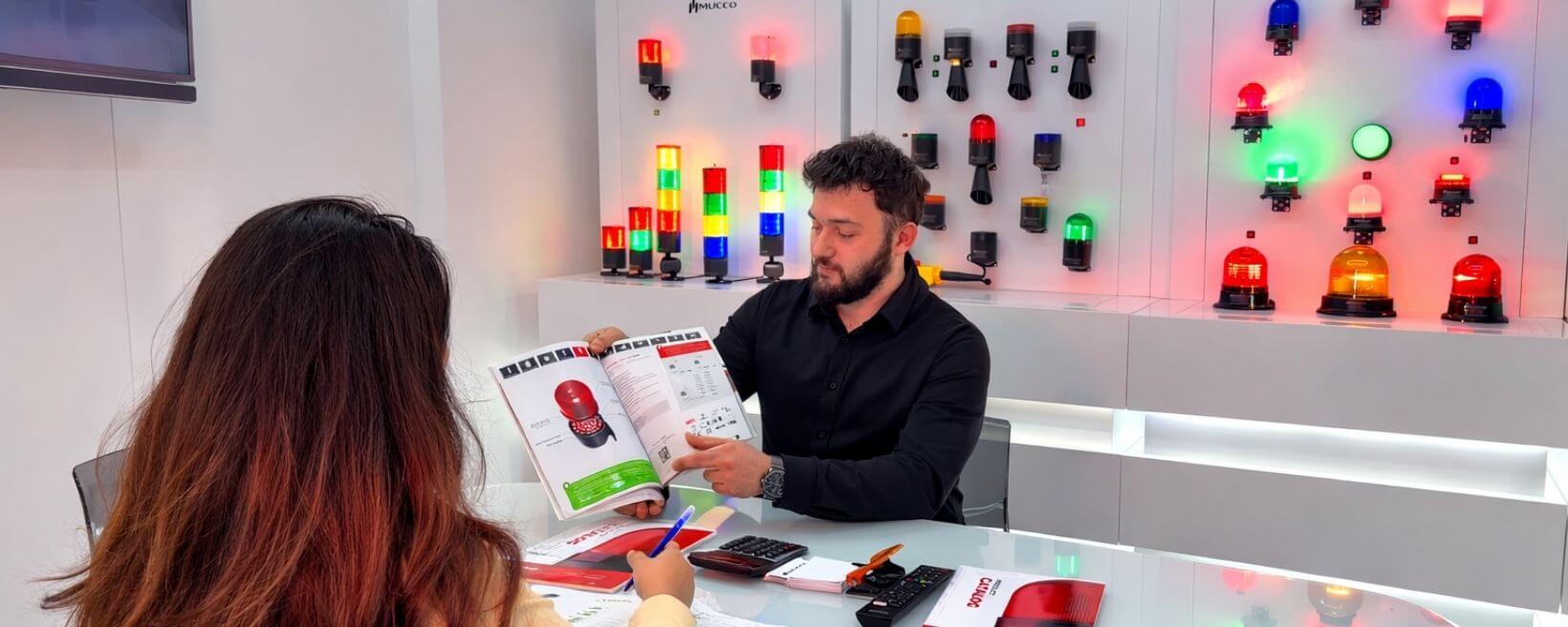
An industrial Andon system is more than a stack light on top of a machine. It is a practical communication method that turns machine status, operator requests and production abnormalities into visible, understandable and actionable signals.
In modern manufacturing, every second between a problem appearing and a person responding matters. A machine can stop because a sensor is blocked, a material roll is empty, a safety guard is open, a product is jammed, a tool is worn, an operator needs assistance or a quality check is required. When that information stays hidden inside a PLC, HMI screen or local machine display, response time becomes slower. When the same information is translated into a clear visual or audible signal, the entire production team can react faster.
This is the core value of an industrial Andon system. It gives machines a simple language that operators, supervisors, maintenance teams and quality staff can understand from a distance. Instead of relying only on screens, reports or verbal communication, Andon uses machine status monitoring lights, stack lights, signal beacons, warning horns and audio-visual alarms to make production conditions visible in real time.
For machine builders and industrial facilities, Mucco Signal offers stack lights, RGB warning lights, signal beacons, warning horns and heavy-duty warning devices that can support Andon systems, lean manufacturing practices and visual management strategies across different production environments.
Table of Contents
- What Is an Industrial Andon System?
- Why Andon Still Matters in Smart Factories
- Visual Management in Manufacturing
- From Signal to Action: The Five Layers of an Andon System
- Colour, Sound and Escalation Logic
- Using Andon Signals to Support OEE and Downtime Reduction
- Mucco Product Recommendations for Andon Applications
- Industrial Andon Implementation Roadmap
- Human Factors, Noise and Alarm Fatigue
- Application Examples by Industry
- Maintenance and Continuous Improvement
- Frequently Asked Questions
- Sources and Further Reading
What Is an Industrial Andon System?
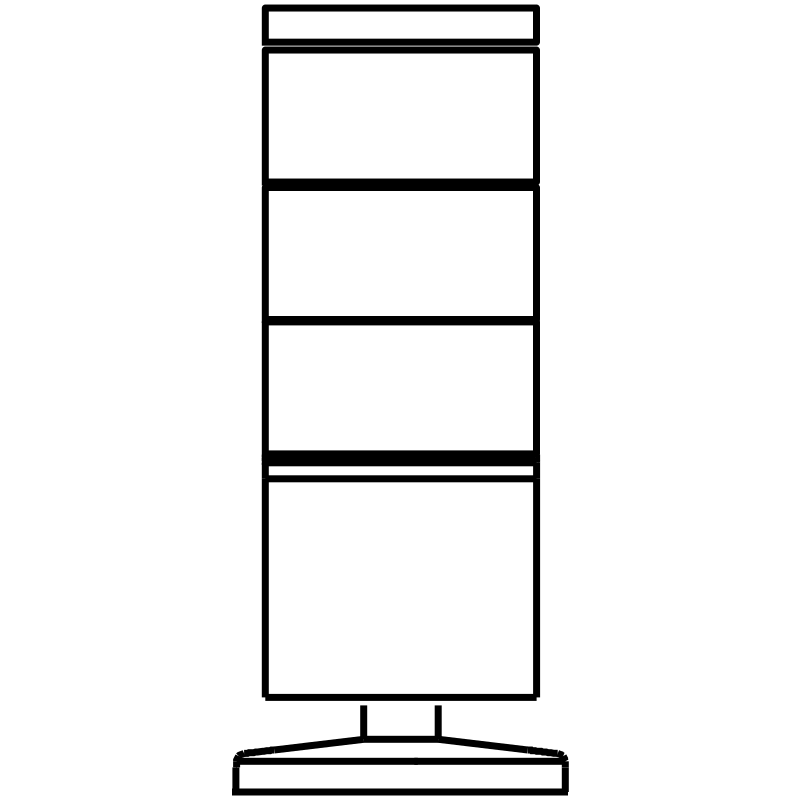
An industrial Andon system is a visual and sometimes audible communication system used to show the status of a production process. In its simplest form, it may be a three-colour stack light that shows whether a machine is running, waiting or stopped. In a more advanced form, it can include manual call buttons, RGB signal lights, warning horns, escalation rules, dashboards and integration with machine data.
The term Andon is strongly associated with lean manufacturing and the Toyota Production System. The Lean Enterprise Institute describes Andon as a visual management tool that highlights operational status and signals abnormalities. In practice, the concept is simple: when something requires attention, the workplace should make that need visible immediately instead of hiding it inside the process. [1]
An Andon system can be used for many different types of information. A green light may show that production is running normally. A yellow light may show that the operator needs material, inspection or assistance. A red light may show that the machine has stopped or that a critical fault exists. A blue light may indicate quality control, maintenance support or a special production mode. A white light may indicate power, setup or a custom status defined by the factory.
The important point is not only the lamp colour. The real value comes from the response process behind the signal. If yellow means “material shortage,” then the material handler should know what to do. If red means “line stopped,” then maintenance or the line leader should have a defined response time. If blue means “quality check required,” then quality staff should understand that the product cannot continue until the check is completed.
For this reason, an industrial Andon system should be designed as a communication workflow, not only as an electrical accessory. The hardware is visible, but the discipline behind the hardware is what creates operational value.
Why Andon Still Matters in Smart Factories
Smart manufacturing is often associated with sensors, cloud platforms, dashboards, data analytics and industrial networks. These technologies are powerful, but they do not remove the need for clear local communication. A dashboard may show downtime after it happens. A production report may explain a loss at the end of the shift. An Andon signal helps people respond while the situation is still active.
The National Institute of Standards and Technology describes smart manufacturing in relation to real-time control, data analytics and connected production systems. This direction is important because factories increasingly depend on fast information flow. However, information must be understandable to the people who operate and maintain the equipment. A visual signal on the shop floor is one of the simplest bridges between machine data and human action. [2]
In many facilities, operators are responsible for more than one machine. Supervisors walk between multiple cells. Maintenance teams cover wide production areas. A machine may stop for only a minor reason, but if nobody notices quickly, the loss becomes larger. A visible tower light or signal beacon allows a problem to be recognized from across the production hall without opening a panel, checking a screen or waiting for a report.
Andon is also useful because it creates a shared language. A new operator, experienced technician, visitor or shift supervisor can understand the basic machine condition at a glance. This is especially valuable in multilingual workplaces where spoken explanations may take longer or be misunderstood. Colour-coded visual management reduces ambiguity when it is standardized across the facility.
The most effective factories combine digital monitoring with physical visibility. A PLC may send machine data to a dashboard, while the same machine activates a stack light for immediate local awareness. A quality issue may be logged in the manufacturing system, while a blue signal calls the quality technician to the station. A safety-related event may trigger a machine stop, while a red beacon and horn make the condition clear to nearby personnel.
Visual Management in Manufacturing
Visual management means making the condition of a process easy to see, understand and act upon. It includes floor markings, labels, shadow boards, status boards, production displays, colour-coded storage, inspection indicators and machine signal lights. The purpose is not decoration. The purpose is to reduce hidden information.
Academic literature treats visual management as an important but broad subject in lean production. A literature synthesis by Tezel, Koskela and Tzortzopoulos discusses visual management as a fragmented yet significant area of production management. The practical lesson for factories is clear: when information is made visual, teams can coordinate work more easily and detect abnormal conditions sooner. [3]
Machine status monitoring lights are one of the most direct forms of visual management. They show the condition of a specific asset at the exact location where the condition matters. Unlike a report, they do not require interpretation after the event. Unlike an HMI screen, they do not require a person to stand directly in front of the machine. Unlike a verbal message, they do not depend on one person finding another person.
A good visual management system should answer four simple questions:
- Is the process normal or abnormal?
- Where is attention required?
- How urgent is the situation?
- Who should respond next?
Stack lights and Andon lights help answer the first three questions immediately. The fourth question must be defined by the factory through standard work, escalation rules and training.
For example, a packaging line may use green for “running,” yellow for “material needed within five minutes,” red for “line stopped,” and blue for “quality approval required.” The visual meaning is simple. The response rules make it operational: material handlers respond to yellow, maintenance responds to red, and quality responds to blue. Without those rules, the light is only a signal. With those rules, the light becomes part of the production system.
From Signal to Action: The Five Layers of an Andon System
A reliable industrial Andon system can be understood in five layers: detection, classification, indication, response and learning. Thinking in layers prevents the common mistake of buying warning devices before defining the process logic.
1. Detection
Detection is the moment when the system recognizes that a condition exists. The signal may come from a PLC, sensor, relay output, safety controller, manual push button or machine software. Examples include motor overload, guard open, low air pressure, material empty, cycle complete, quality hold or operator assistance request.
In simple systems, detection may be fully manual. An operator presses a button to call for support. In automated systems, the machine controller activates the signal based on programmed conditions. Both methods are valid. The correct choice depends on the process and the level of automation.
2. Classification
Classification defines what the condition means. Not every abnormal event has the same priority. A material request is not the same as a machine fault. A quality check is not the same as an emergency stop. A maintenance request is not always the same as a critical production loss.
Classification should be simple enough to train and repeat. If a facility creates too many categories, operators may hesitate or choose the wrong one. A practical starting point is normal, attention, stop, quality and maintenance. More categories can be added after the team proves that it can respond consistently.
3. Indication
Indication is the visible or audible output. This may be a stack light, RGB warning light, signal beacon, warning horn or heavy-duty siren. The device should be selected according to distance, environment, noise level, mounting position, voltage, wiring method and message complexity.
For machine-level indication, a stack light is often ideal. For a single fault or door status, a signal beacon may be enough. For operator call systems, an Andon kit with a button can be practical. For noisy areas, a combined light and horn may be required. For large industrial zones, heavy-duty warning lights and sirens may be more suitable.
4. Response
Response is the human action triggered by the signal. The response process should define who reacts, how quickly they react, what they check first and how they close the event. A visual signal without ownership can become background noise. A signal with clear ownership creates accountability.
Good response rules are specific. Instead of saying “someone should check the machine,” define that the line leader responds to yellow within three minutes, maintenance responds to red after operator confirmation, and quality responds to blue before product release. The exact timing will vary by factory, but the principle remains the same.
5. Learning
Learning means using Andon events to improve the process. If the same machine activates yellow twenty times per shift, the problem may not be operator behaviour; it may be material flow, machine design or production planning. If red faults repeatedly occur after changeover, the changeover standard may need improvement.
Andon should not be used only to react. It should also help teams identify recurring losses. When signals are linked to event logs, downtime categories or production meetings, they become part of continuous improvement.
Colour, Sound and Escalation Logic
Colour is the most familiar part of an Andon system, but colour logic must be consistent. A red light should not mean one thing on one machine and a different thing on another machine unless there is a very clear reason. Standardization makes signals easier to learn and reduces mistakes.
A practical colour logic for manufacturing environments may be:
- Green: normal operation, automatic cycle running or production OK.
- Yellow or amber: attention required, material low, waiting condition or upcoming interruption.
- Red: fault, stop, critical alarm or immediate intervention required.
- Blue: quality check, supervisor call, maintenance request or special support.
- White: setup mode, power status, inspection mode or site-specific condition.
Sound should be used more carefully than colour. An audible alarm is powerful because it reaches people who are not looking at the machine. However, too much sound can create annoyance, confusion and alarm fatigue. Human factors research on alarm design emphasizes that alarms should be meaningful, distinguishable and appropriate to the context, rather than simply loud. [4]
Escalation logic is the connection between time and priority. For example, a yellow material request may start as a steady light. If nobody responds after three minutes, it may become flashing. If production stops, red may activate with a buzzer. This allows the system to communicate urgency without using the strongest alarm for every event.
A simple escalation sequence can look like this:
| Condition | Initial Signal | Escalated Signal | Expected Response |
|---|---|---|---|
| Material running low | Steady yellow | Flashing yellow | Material handler supplies parts before line stop |
| Operator needs assistance | Blue light | Blue light plus short tone | Line leader or technician checks the station |
| Machine stopped | Red flashing light | Red light plus horn | Operator confirms fault and maintenance responds |
| Quality hold | Steady blue or white | Flashing blue | Quality team approves or rejects product flow |
The best escalation logic is simple, visible and documented. Operators should not need to guess whether a flashing yellow is more urgent than a steady yellow. The rules must be trained and posted near the process when necessary.
Using Andon Signals to Support OEE and Downtime Reduction
Overall Equipment Effectiveness, commonly known as OEE, is widely used to understand production losses through availability, performance and quality. Andon systems can support OEE improvement because they make loss events visible while they are happening.
Availability losses are often the easiest to connect with Andon. When a machine is stopped, a red signal makes the loss visible. When material is low, a yellow signal can prevent a future stop. When the operator waits for inspection, a blue signal can reduce hidden waiting time. Each signal creates an opportunity to reduce the time between abnormal condition and corrective action.
Performance losses can also be supported. A machine may still be running, but at a lower speed because of small stops, minor jams, unstable material feed or repeated operator adjustments. A well-designed Andon logic can show when the process is running below expectation, not only when it is completely stopped. This is where integration with PLC data or production counters can become valuable.
Quality losses can be reduced when quality-related states are visible. For example, a blue signal may call for first-piece approval after changeover. A white signal may indicate inspection mode. A red signal may show that a machine is blocked because quality release has not been completed. In each case, the signal prevents uncertainty and helps the correct person respond.
The connection between Andon and downtime reduction becomes stronger when events are logged. A stack light helps with immediate response. A downtime log helps with long-term improvement. When the same event appears repeatedly, teams can investigate root causes rather than only restarting the machine.
NIST research on smart manufacturing highlights the role of real-time analytics and continuous performance management. In practical factory terms, this means local signals and digital data should support each other. Lights help people respond now. Data helps the organization improve the process later. [5]
Mucco Product Recommendations for Andon Applications
Mucco Signal offers several product families that can be used to build industrial Andon systems, machine status monitoring solutions and audio-visual alarm points. The best product depends on the required message, installation area, voltage, visibility distance, sound requirement and environmental conditions.
For Manual Operator Call and Lean Workstations
For manual assistance requests, the Mucco Led Andon Kit RGB Stack Light is a practical option. It is designed as an Andon kit and can be selected with push button control, different light modes and buzzer options. This makes it suitable for assembly benches, manual workstations, quality gates and production cells where an operator needs a simple way to call for support.
In a lean workstation, the goal is not to create a complicated alarm system. The goal is to make support needs visible. A button-controlled Andon light can help operators request material, supervisor assistance, maintenance or quality confirmation without leaving the station.
For Standard Machine Status Monitoring
For machine status indication, the Surface Stack Lights With Three Layer 30cm can be used for common red, green and yellow machine states. Three-layer stack lights are suitable for many machines because they communicate normal operation, warning and fault conditions clearly.
For modular machine designs, the 50 Series Modular Stack Light With Three Layer and M12 8 Pin Connector is useful when compact size, modularity and connector-based installation are preferred. M12 connector options can simplify assembly and service for machine builders.
For Flexible Colour Logic and Multi-Status Machines
Some machines require more flexible colour logic than a fixed three-layer tower. In these applications, RGB warning lights can help reduce hardware complexity. The Surface Multicolor RGB Warning Light can display multiple colours from one device, making it suitable for machines that need different status colours without using many separate lens modules.
For applications that need a larger RGB visual indicator, the 90 Series Multicolor RGB Warning Light can be considered. RGB lights are especially useful for custom Andon logic, quality states, operator guidance and machines where status definitions may change over time.
For Local Fault, Door and Area Status
When a machine only needs one clear visual indication, a signal beacon may be more efficient than a tower light. The 90 Series Signal Beacon and 100 Series Signal Beacon are suitable for local fault indication, access status, area warnings, panel alarms and process status points.
Signal beacons are also useful when the message is binary: active or inactive, open or closed, fault or normal, safe or restricted. They can be mounted on machines, panels, doors, technical rooms and process equipment where a single status must be visible from a distance.
For Audible Support and Audio-Visual Alarm Points
If people may not see the signal, sound should be considered. Mucco’s Warning Horns and Universal Warning Horns with 16 Tones can support applications where visual indication needs to be combined with audible attention.
Warning horns are useful for conveyor start warnings, operator calls, machine alarms, door alarms and production events that require immediate awareness. Tone selection should be standardized so that workers can distinguish between routine calls and urgent alarms.
For Heavy-Duty Industrial Areas
In large halls, outdoor areas, heavy machinery zones or high-noise environments, compact devices may not be enough. The ESP Series Heavy Duty Warning Light and the Heavy-Duty Warning Lights category are suitable for applications that require stronger visual and audible performance.
Heavy-duty warning devices should be selected carefully according to the installation environment, viewing distance, sound level, control voltage and safety requirements. In noisy workplaces, audible signals must be effective but also managed responsibly.
| Andon Requirement | Recommended Mucco Product Type | Typical Use |
|---|---|---|
| Manual operator call | Led Andon Kit RGB Stack Light | Assembly cells, workstations, supervisor call, quality call |
| Basic machine status | Three Layer Surface Stack Light | Running, warning, stopped states |
| Modular machine builder solution | 50 Series Modular Stack Light | Compact machines, OEM equipment, connector-based installation |
| Flexible status colours | Surface Multicolor RGB Warning Light | Custom colour logic, quality status, process modes |
| Single local warning | 90 Series Signal Beacon | Fault indicator, door status, panel alarm |
| Light plus sound | Warning Horns | Conveyor warning, operator call, machine alarm |
| Large or demanding area | ESP Series Heavy Duty Warning Light | Heavy machinery, plant areas, high-noise industrial zones |
Industrial Andon Implementation Roadmap
Implementing an Andon system does not need to start with a large digital project. A practical approach is to begin with a pilot area, standardize the signals, train the team and then expand.
Step 1: Select a Pilot Process
Choose a process where response time matters and where the team can observe results quickly. A packaging line, assembly cell, filling machine, CNC area or material feeding station can be a good pilot. Avoid starting with the most complicated process in the factory. Start where the signal logic can be tested and improved.
Step 2: Define Status Categories
Before selecting hardware, define the statuses that need to be communicated. Do not create more categories than the team can respond to. A strong starting structure is running, attention, stopped, quality and maintenance. Each category should have a colour, a trigger condition and an owner.
Step 3: Select the Right Signal Device
Select the device according to the status categories. A three-layer stack light is suitable for simple machine status. An RGB light is useful for flexible status logic. A warning horn is useful when visual indication alone is not enough. A heavy-duty warning light is suitable for large or demanding areas.
Step 4: Define Response Rules
Each signal must have a response rule. Who responds to yellow? Who responds to red? When does a signal escalate? How is the event closed? What happens if nobody responds? These questions should be answered before the system is considered complete.
Step 5: Train Operators and Support Teams
Operators should know what each signal means and when to activate manual calls. Maintenance, material handlers, line leaders and quality personnel should know which signals require their response. Training should be short, practical and repeated when new employees join the area.
Step 6: Review Data and Improve
After the pilot runs for several weeks, review the most common signals. Are yellow calls reducing red stops? Are red faults being answered quickly? Are quality calls too frequent? Are workers ignoring audible alarms? The answers will show whether the system needs technical changes, training or process improvement.
Human Factors, Noise and Alarm Fatigue
Industrial alarms must be designed for people, not only for machines. A technically correct alarm can still fail if it is too confusing, too quiet, too loud, too frequent or too difficult to distinguish from other alarms.
Audible alarms require special attention in noisy workplaces. NIOSH states that the recommended exposure limit for occupational noise is 85 dBA as an eight-hour time-weighted average. OSHA also requires hearing conservation programs when general industry noise exposure reaches or exceeds 85 dBA as an eight-hour time-weighted average. These references are important reminders that sound-based warning systems must be considered together with occupational noise management. [6][7]
This does not mean audible alarms should be avoided. It means they should be selected and used intelligently. A horn should be audible enough to be noticed, but it should not become an unnecessary source of stress or confusion. Different tones should have different meanings only when the workforce is trained to recognize them.
Human factors research on audible alarm design shows that alarm effectiveness depends on more than volume. Learnability, urgency, meaning, context and distinguishability all matter. A multidisciplinary design framework for audible alarms emphasizes that alarm design is complex because it must connect technical, human and environmental factors. [8]
Visual signals also need human factors thinking. A light hidden behind a machine guard will not help. A beacon installed too low may be blocked by materials. A colour that is visible in a dim workshop may be weak under strong daylight. A signal that uses unusual colour logic may confuse operators who move between different machines.
Practical rule: Use the least aggressive signal that still communicates the correct urgency. Reserve loud sounds and fast flashing patterns for conditions that truly need immediate attention.
Application Examples by Industry
Packaging Lines
Packaging lines are ideal for Andon systems because many stops are caused by material flow, jams, film changes, label errors or downstream congestion. A yellow signal can show that packaging material is running low. A red signal can show that the line has stopped. A blue signal can request quality inspection after a changeover.
Assembly Cells
Manual and semi-automatic assembly cells often need operator call systems. A button-controlled Andon light can help an operator request parts, tools, maintenance or supervisor support without leaving the station. This reduces walking, searching and informal communication delays.
CNC and Machine Tool Areas
CNC machines can use stack lights to show cycle running, cycle complete, tool alarm, setup mode and machine fault. When one operator supervises multiple machines, visible status indicators help prioritize which machine needs attention first.
Food and Beverage Production
Food and beverage production often depends on continuous flow, hygiene, inspection points and fast response to stoppages. Signal beacons and stack lights can indicate filling status, cap supply, label condition, reject state, inspection hold or cleaning mode. Product selection should consider environmental conditions, cleaning practices and installation location.
Warehouse and Conveyor Systems
Conveyor systems may require start warnings, jam indication, zone status and operator call points. Visual and audible warning devices help workers understand when a conveyor is about to move or when a section requires attention. In long conveyor systems, multiple signal points may be needed.
Heavy Industry and Outdoor Areas
Heavy-duty environments may include dust, vibration, higher noise, outdoor exposure or greater viewing distances. In these applications, larger warning lights, protection cages, stronger sound output and robust mounting methods should be considered. The Mucco heavy-duty range can support these more demanding requirements.
Maintenance and Continuous Improvement
An Andon system should be maintained like any other production tool. If a stack light is damaged, dirty, disconnected or poorly visible, the system loses credibility. Operators may stop trusting the signals, and response behaviour may decline.
Maintenance checks should include lens cleanliness, mounting stability, cable condition, connector tightness, correct colour operation, buzzer function and visibility from normal working positions. If a machine layout changes, the signal location should be reviewed. A light that was visible before a new guard or rack was installed may become hidden afterward.
Continuous improvement should focus on signal quality, not only signal quantity. More lights do not automatically mean better communication. A factory with fewer but clearer signals may perform better than a factory where every machine flashes constantly. The goal is to make abnormal conditions obvious and actionable.
Useful review questions include:
- Which signals occur most often?
- Which signals take longest to resolve?
- Are operators using manual calls correctly?
- Are any signals ignored because they happen too frequently?
- Do all shifts interpret colours and tones the same way?
- Are signal meanings documented in machine manuals and training materials?
When Andon is connected to daily management, it becomes more than a warning system. It becomes a source of operational learning.
Frequently Asked Questions
What is the main purpose of an industrial Andon system?
The main purpose is to make machine status, operator requests and production abnormalities visible so that the correct person can respond quickly. It supports visual management, lean manufacturing and faster issue resolution.
Is an Andon system only a stack light?
No. A stack light can be part of an Andon system, but the system also includes trigger logic, colour meanings, response rules, escalation methods and continuous improvement routines.
Which Mucco product is suitable for a manual operator call?
The Mucco Led Andon Kit RGB Stack Light is suitable for manual operator call applications because it can be configured with push button control and visual signal options.
Which product is better for simple machine running, warning and fault states?
A three-layer stack light such as the Surface Stack Lights With Three Layer 30cm is a practical choice for green, yellow and red machine status indication.
When should an RGB warning light be used?
RGB warning lights are useful when one device needs to display several colours or when the machine status logic may change. They are suitable for custom Andon systems, quality status indication and flexible production modes.
When should audible alarms be added?
Audible alarms should be added when visual signals may not be noticed quickly, when workers do not have a direct line of sight, or when a start warning or urgent alarm must reach nearby personnel. Sound should be selected according to the real noise environment.
Can Andon help reduce downtime?
Yes. Andon can reduce downtime by shortening the time between abnormal condition and response. It is especially effective when signals are connected to clear ownership, escalation rules and downtime analysis.
Build a Clearer Andon System With Mucco Signal
A successful industrial Andon system starts with clear communication. Define your machine states, standardize colour logic, choose the right visual and audible devices, and train the response process. Mucco Signal provides industrial stack lights, RGB warning lights, signal beacons, warning horns and heavy-duty warning lights for machine builders and production facilities.
Explore Mucco Stack Lights, Andon Kit RGB Stack Lights, Signal Beacons, Warning Horns and Heavy-Duty Warning Lights to select the right solution for your production line.
Sources and Further Reading
- Lean Enterprise Institute, “Andon – Lean Lexicon.” https://www.lean.org/lexicon-terms/andon/
- National Institute of Standards and Technology, “Smart Manufacturing Systems Design and Analysis Program.” https://www.nist.gov/programs-projects/smart-manufacturing-systems-design-and-analysis-program
- Tezel, A., Koskela, L., & Tzortzopoulos, P., “Visual Management in Production Management: A Literature Synthesis.” https://eprints.hud.ac.uk/id/eprint/28569/
- Pruitt, Z. M. et al., “Informing Healthcare Alarm Design and Use: A Human Factors Cross-Industry Perspective.” https://patientsafetyj.com/article/73905-informing-healthcare-alarm-design-and-use-a-human-factors-cross-industry-perspective
- NIST, “Integrating Real-Time Analytics and Continuous Performance Management in Smart Manufacturing Systems.” https://www.nist.gov/publications/integrating-real-time-analytics-and-continuous-performance-management-smart
- CDC / NIOSH, “Understand Noise Exposure.” https://www.cdc.gov/niosh/noise/prevent/understand.html
- Occupational Safety and Health Administration, “Occupational Noise Exposure.” https://www.osha.gov/noise
- Sanz-Segura, R. et al., “Design Framework for Audible Alarms: A Multidisciplinary Approach.” International Journal of Design. https://www.ijdesign.org/index.php/IJDesign/article/view/3911/987