













Industrial Warning Horns and Sounder Beacons: Complete Guide to Multi-Tone Audible-Visual Alarms
In modern factories, warehouses, process plants and automated production environments, an alarm must do more than simply make noise. It must attract attention, remain recognizable in changing background conditions and communicate the correct level of urgency to workers. This is why industrial warning horns, multi-tone sounders and sounder beacons are widely used as part of industrial signaling systems.
Depending on the country and industry, the same type of product may be searched for as an industrial warning horn, electronic horn, industrial sounder, multi-tone sounder, audible visual alarm, sounder beacon, alarm horn, horn with warning light or even an industrial hooter.
Although the terminology varies, the requirement is essentially the same: provide a clear audible and, where required, visual warning that personnel can recognize quickly.
This guide explains industrial warning horns, sounder beacons, multi-tone alarms, sound pressure levels, voltage selection, visual signaling, IP protection and the factors engineers should consider when choosing an audible-visual signaling device.
What Is an Industrial Warning Horn?
An industrial warning horn is an electrically operated audible signaling device designed to attract attention when a machine, process or facility reaches a predefined condition.
Typical events can include:
- Machine startup
- Machine fault
- Process alarm
- Conveyor movement
- Crane movement
- Material handling operations
- Maintenance requests
- Production line stops
- Equipment malfunction
- General plant warnings
Unlike a basic buzzer, an industrial horn is normally selected for environments where a stronger and more distinctive audible signal is required.
Modern electronic warning horns may also provide several selectable tones. This allows one signaling device to communicate different conditions instead of requiring a different horn for every event.
Warning Horn, Sounder Beacon, Electronic Horn or Audible-Visual Alarm?
One important issue when searching for industrial alarms is terminology. Different English-speaking markets often use different names for similar products.
Industrial Warning Horn
Warning horn and industrial warning horn are widely understood terms, particularly in machinery, factory automation, heavy equipment and general industrial signaling applications.
Electronic Horn
The term electronic horn is frequently used in North American industrial signaling. Unlike an air horn or traditional electromechanical horn, an electronic horn generates its warning signal electronically.
Industrial Sounder
Industrial sounder and electronic sounder are particularly common terms in the United Kingdom, Ireland, Australia and other markets influenced by British industrial terminology.
Sounder Beacon
When an audible warning device is combined with a visual beacon, the product is commonly called a sounder beacon.
A sounder beacon combines two signaling channels:
- An audible alarm
- A visual warning light
This combination is valuable because workers may not always be looking toward the alarm device when an event occurs.
Audible-Visual Alarm
In North American automation catalogs, the broader terms audible-visual alarm and audible-visual signaling device are frequently used.
These terms can include horns, buzzers, sirens and sounders combined with LED or strobe warning lights.
Industrial Hooter
In some markets, especially South Africa and parts of Asia, the term industrial hooter is also used for electrically operated industrial warning devices.
For international procurement, understanding these terminology differences makes it easier to identify equivalent products.
Why Use a Multi-Tone Warning Horn?
A traditional industrial horn may generate only one sound. A multi-tone warning horn, however, can provide several selectable alarm tones.
This creates important advantages in industrial environments.
Different tones can be assigned to different operational events. For example:
- Tone 1: machine startup warning
- Tone 2: general machine fault
- Tone 3: maintenance request
- Tone 4: conveyor movement warning
- Tone 5: process alarm
- Tone 6: production line stop
Using distinguishable tones can help workers associate different sounds with different required actions.
Human-factors research into auditory alarms has repeatedly emphasized that alarm signals should be recognizable and distinguishable rather than simply being made as loud as possible.
Therefore, the number of tones available is useful only when the factory creates a clear alarm philosophy and trains personnel to understand what each selected signal means.
16-Tone Warning Horns for Flexible Industrial Signaling
A 16-tone warning horn provides machine designers with more flexibility than a conventional single-tone alarm.
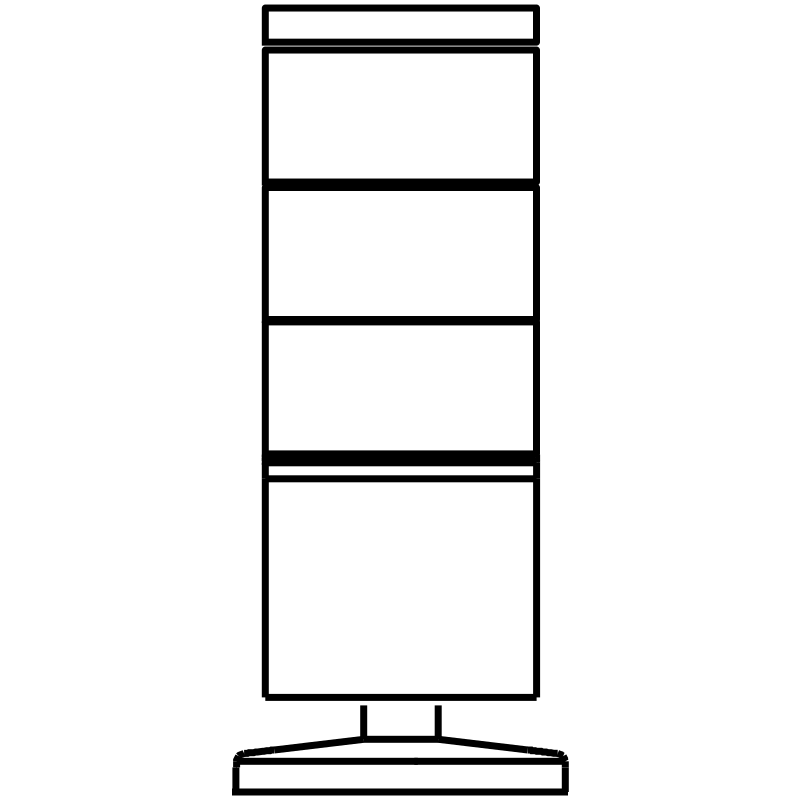
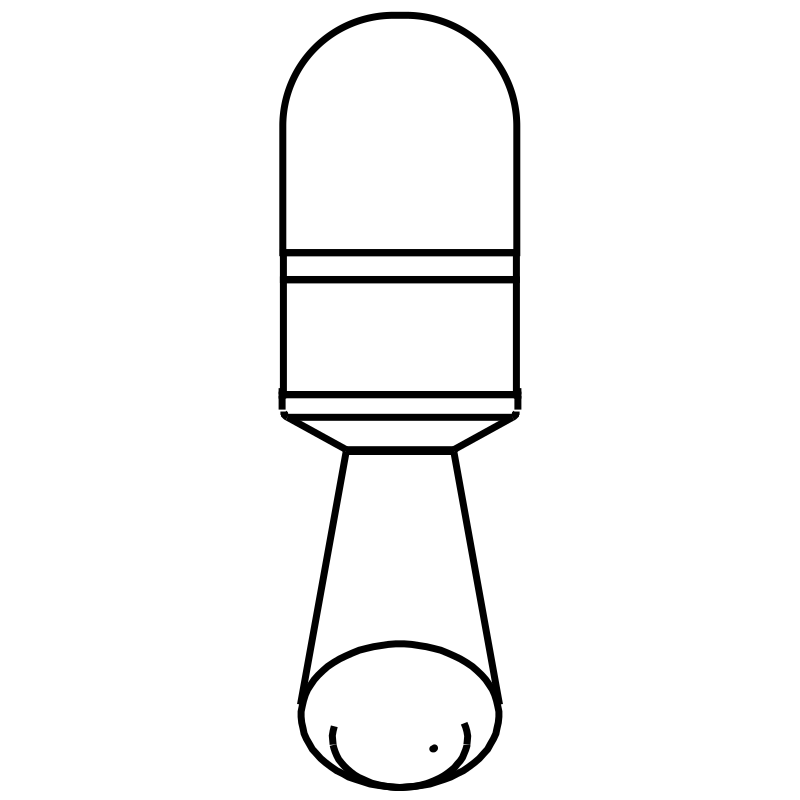
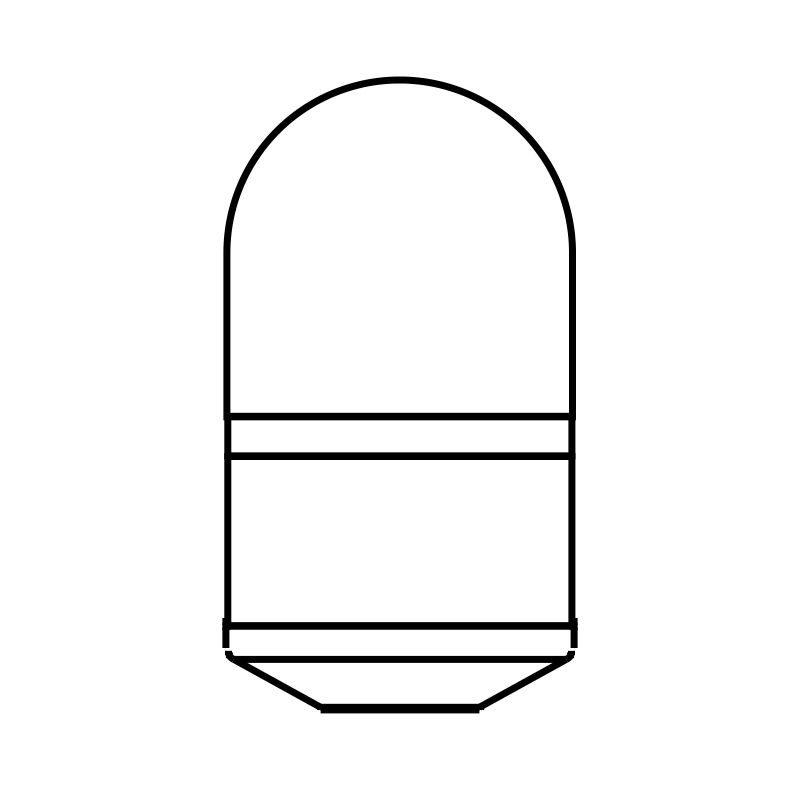
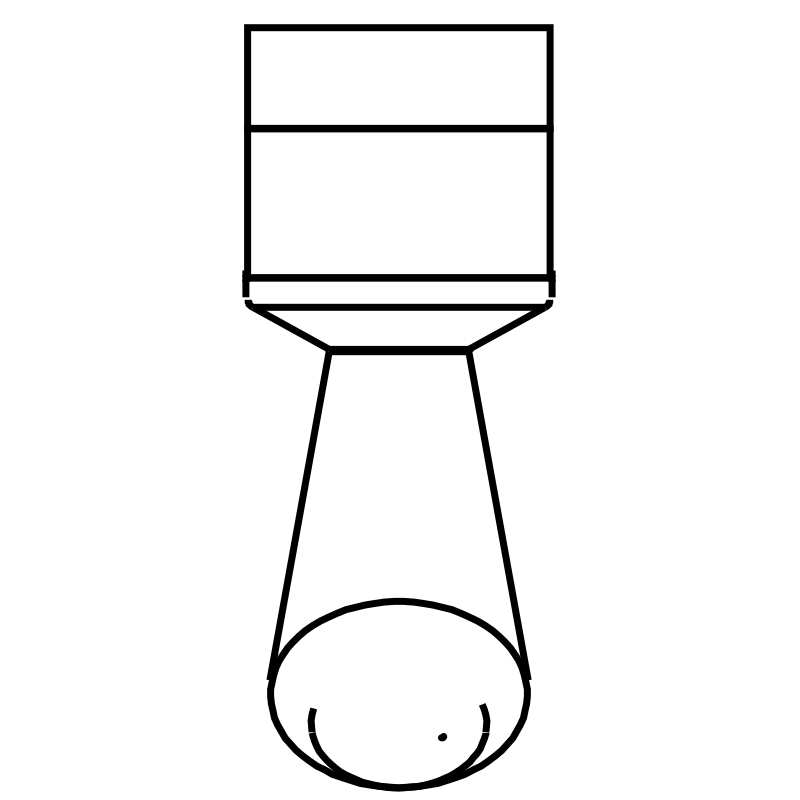
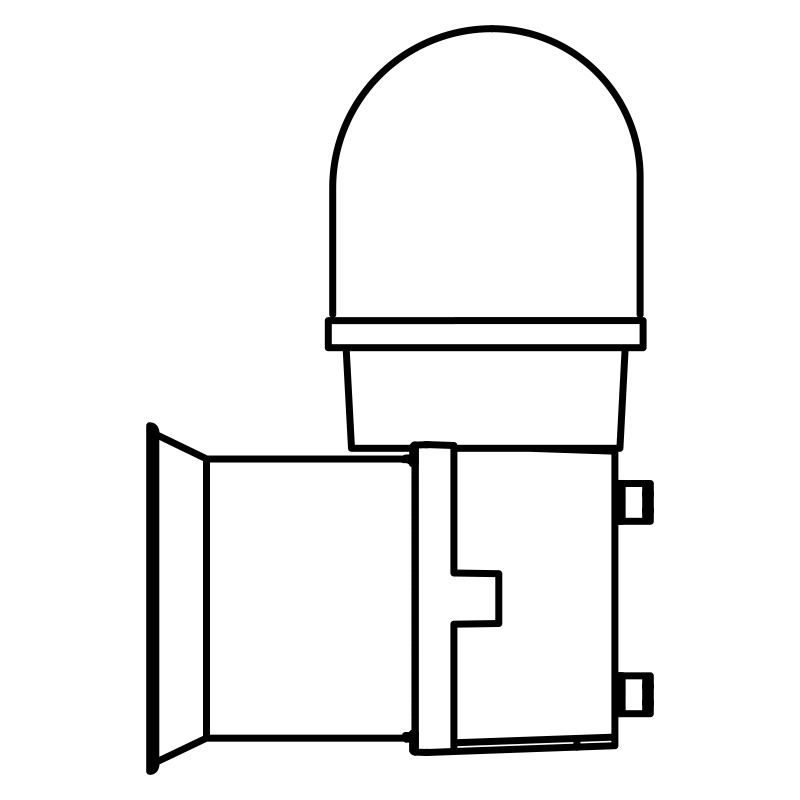
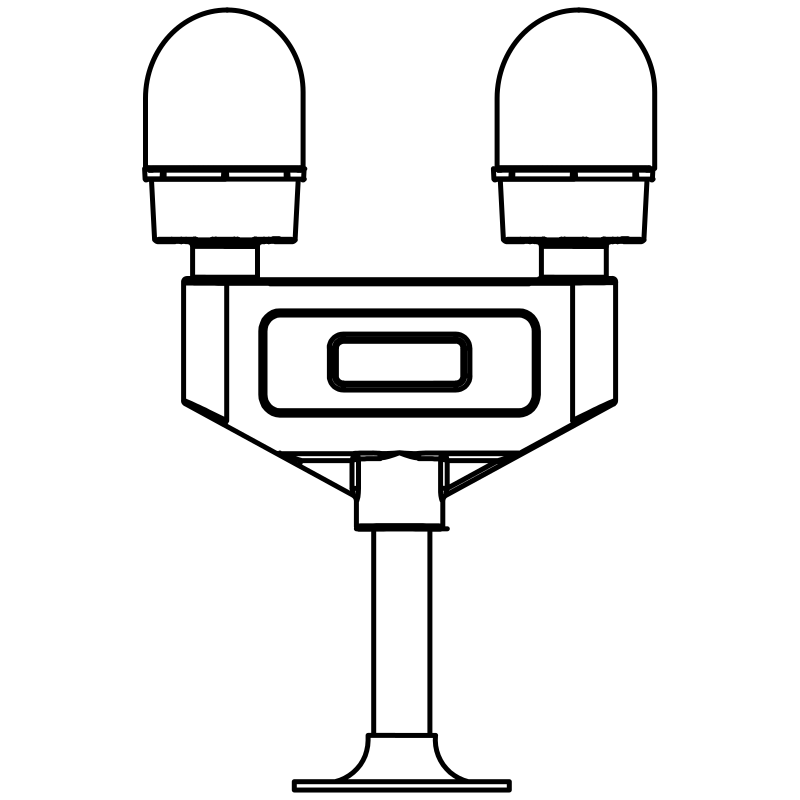
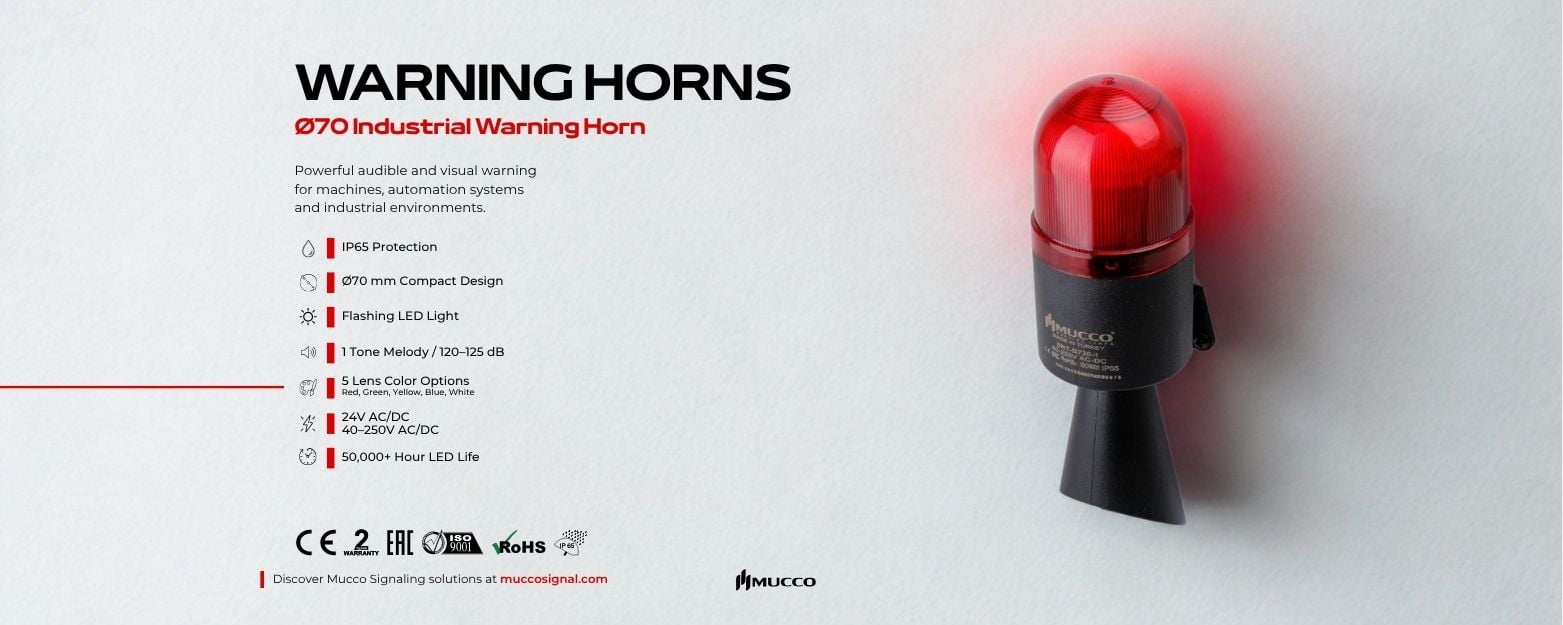
For applications requiring both high sound output and visual indication, the Mucco Universal Industrial Warning Horn with 16 Tones combines an electronic audible alarm with an LED warning light.
The product provides 16 selectable tones that can be changed through an internal button. This allows equipment manufacturers and system integrators to select an alarm pattern suitable for the application.
The unit can therefore be considered not only an industrial warning horn but also a multi-tone audible-visual signaling device.
How Loud Should an Industrial Warning Horn Be?
Sound output is one of the most important specifications when choosing an industrial alarm.
Industrial warning horns are typically specified using sound pressure level in decibels, usually written as dB or dB(A), at a specified distance.
For example, a manufacturer may specify:
Sound output: 124–130 dB at 1 meter.
Distance is important because sound pressure decreases as the listener moves farther away from the source.
The Mucco 16-tone industrial warning horn offers a sound intensity of approximately 124–130 dB at 1 meter, depending on configuration and tone, with output adjustment through a potentiometer.
This makes it suitable for applications where a high-output industrial audible warning is required.
Louder Is Not Automatically Better
Choosing an alarm should not be based simply on purchasing the device with the highest possible dB rating.
The warning needs to be clearly perceivable against the background noise while avoiding unnecessary exposure to excessive sound.
Important factors include:
- Ambient noise level
- Frequency spectrum of surrounding machinery
- Distance between alarm and personnel
- Walls and machinery blocking sound propagation
- Use of hearing protection
- Number of alarm devices operating simultaneously
- Required urgency
OSHA requirements for employee alarm systems in the United States state that alarms should be capable of being perceived above ambient noise or light levels and should be distinctive and recognizable for the intended action.
ISO 7731 also addresses ergonomic principles and requirements for auditory danger signals in public and work areas.
Therefore, an industrial alarm system should be designed around the actual acoustic environment rather than the horn specification alone.
Why Adjustable Volume Is Important
An adjustable-volume warning horn provides additional flexibility during commissioning.
A machine installed in a quiet production room may not require the same output as the same machine installed beside presses, compressors or heavy processing equipment.
Adjustable output allows engineers to adapt the audible signal to the installation environment.
The Mucco Universal Warning Horn provides sound-level adjustment through an integrated potentiometer, allowing the audible output to be adapted according to application requirements.
Why Combine a Warning Horn With an LED Warning Light?
An audible warning attracts attention regardless of the direction a worker is facing. A visual warning provides persistent information and can help personnel locate the source of an alarm.
Combining both creates an audible-visual alarm.
This is especially useful in:
- Noisy factories
- Warehouses
- Machine halls
- Production lines
- Process plants
- Material handling areas
- Equipment rooms
A visual warning can remain active after the initial audible alert, helping maintenance teams identify which machine generated the alarm.
LED Warning Light Modes
Modern sounder beacons may provide several visual signaling modes rather than a simple continuously illuminated lamp.
The Mucco 16-tone warning horn uses SMD LED technology and supports several light modes:
- Steady
- Flashing
- Slow flashing
- Strobe
- Fast strobe
The most suitable mode depends on the signaling philosophy.
A steady light can communicate a persistent condition, while a flashing or strobe signal can be used when greater visual attention is required.
Warning Light Colors
Different lens colors can help communicate different types of information.
Available colors include:
- Red
- Yellow
- Green
- Blue
- White
In industrial signaling systems, red is commonly associated with serious faults or stop conditions, while yellow or amber often communicates warning or attention. Green is normally associated with normal or satisfactory operation.
However, final color meanings should be defined according to the machine, facility and applicable standards.
24V Warning Horns for Industrial Automation
24V warning horns are widely used in industrial automation because 24V control systems are common in PLC panels, sensors and machine controls.
A low-voltage industrial horn can often be integrated into relay or PLC-controlled signaling circuits.
The Mucco Universal Warning Horn supports 12–24V AC/DC, providing flexibility for many low-voltage industrial applications.
When connecting any warning device to a PLC, engineers should verify:
- Operating voltage
- AC or DC compatibility
- Current consumption
- Output transistor capacity
- Required interface relay
- Common wiring arrangement
110V, 120V, 220V and 230V Warning Horn Applications
Not every industrial installation uses 24V control power.
Machine builders, infrastructure systems and existing industrial installations may use higher control voltages.
The Mucco warning horn is also available with a 40–250V AC/DC wide-range input.
This broad voltage range can be useful for manufacturers supplying equipment to different international markets.
It can cover many applications where searches might otherwise be made for:
- 110V warning horn
- 120V industrial horn
- 220V alarm horn
- 230V sounder beacon
- 240V industrial sounder
Actual wiring and supply compatibility must always be confirmed from the product datasheet before installation.
What Does IP65 Mean for a Warning Horn?
Industrial alarms are frequently exposed to dust, moisture and difficult operating conditions.
An IP65 warning horn provides an enclosure rating intended to protect against dust ingress and water jets according to the applicable IP classification system.
IP protection is particularly important for devices installed in:
- Factories
- Warehouses
- Production machinery
- Process equipment
- Outdoor industrial areas
- Dusty production environments
The Mucco Universal Warning Horn is rated IP65 and uses an ABS body with a polycarbonate lens. Its specified operating temperature range is -20°C to +50°C.
Common Applications for Industrial Warning Horns
Machine Warning Horns
A machine warning horn can indicate startup, stop, abnormal operation or operator attention requirements.
Conveyor Warning Horns
Conveyor systems may require an audible signal before equipment begins moving or when a blockage or process fault occurs.
Crane Warning Horns
Overhead cranes and other material handling systems can use audible warning devices to communicate movement or operational conditions.
Factory Warning Horns
Factories may use warning horns for machine alarms, process events, shift communication or specific production warnings.
Warehouse Audible Alarms
Warehouses can use audible-visual alarms around automated equipment, loading systems and process areas.
Process Control Alarm Sounders
Process plants may require distinguishable audible alarms for abnormal equipment or process conditions.
How to Choose an Industrial Warning Horn or Sounder Beacon
Before purchasing an industrial warning device, evaluate the following factors.
1. Required Sound Output
Measure or estimate the ambient noise and determine an appropriate sound level.
2. Number of Tones
A multi-tone sounder provides greater flexibility when several signals or international applications must be supported.
3. Visual Signal
Determine whether an audible alarm alone is sufficient or whether personnel also need an LED warning light.
4. Supply Voltage
Confirm whether the installation uses 12V, 24V, 110V, 120V, 220V, 230V or another control voltage.
5. Environmental Protection
Check the required IP rating and operating temperature.
6. Volume Adjustment
Adjustable volume can make commissioning easier across different industrial environments.
7. Light Mode
Select steady, flashing or strobe signaling according to the condition being communicated.
8. Alarm Philosophy
Ensure every tone and light mode has a defined meaning and that personnel understand the required response.
Mucco 16-Tone Industrial Warning Horn
For machinery and industrial applications that require both powerful audible signaling and LED visual indication, the Mucco Universal 16-Tone Industrial Warning Horn provides a versatile solution.
Key specifications include:
- 16 selectable alarm tones
- 124–130 dB sound output at 1 meter
- Adjustable volume by potentiometer
- 12–24V AC/DC option
- 40–250V AC/DC option
- IP65 protection
- SMD LED light source
- Red, yellow, green, blue and white lens options
- Steady, flashing, slow flashing, strobe and fast-strobe modes
- ABS body and polycarbonate lens
- -20°C to +50°C operating range
- Minimum expected operating life of 50,000 hours
These characteristics make the unit relevant to engineers searching for an industrial warning horn, multi-tone sounder beacon, 24V warning horn, 230V sounder beacon, high-decibel industrial horn or audible-visual signaling device.
Frequently Asked Questions
What is an industrial warning horn?
An industrial warning horn is an audible signaling device used to notify personnel of machine, process or facility conditions.
What is a multi-tone sounder?
A multi-tone sounder provides several selectable warning patterns in one device, allowing different tones to be assigned to different alarm conditions.
What is a sounder beacon?
A sounder beacon combines an electronic audible alarm with a visual beacon or LED warning light in one unit.
What is the difference between a warning horn and a siren?
The terminology varies by industry and country. Horns typically produce a distinctive electronic or electromechanical warning sound, while sirens are often associated with sweeping or changing-frequency sounds and wider-area signaling. Electronic products can blur this distinction because one device may generate several different tone patterns.
Is a 130 dB industrial warning horn suitable for noisy factories?
High sound output can be useful in noisy environments, but suitability must be determined from the actual background noise, distance, alarm location and worker exposure. The alarm should be clearly recognizable without creating unnecessary sound exposure.
Can a warning horn work on both 24V and 230V systems?
Some product families offer different voltage versions or wide-range inputs. The Mucco Universal Warning Horn is available in 12–24V AC/DC and 40–250V AC/DC configurations.
What does IP65 mean on an industrial horn?
IP65 indicates dust protection and protection against water jets under the conditions defined by the applicable ingress-protection classification.
Why use both audible and visual alarms?
Audible and visual channels complement each other. Sound can attract attention when personnel are not facing the device, while the light helps identify the location and continuing status of the alarm.
Conclusion
The correct industrial alarm is not simply the loudest device available. Effective signaling requires the right combination of sound output, tone selection, visual indication, voltage compatibility, environmental protection and a clearly defined response procedure.
Depending on the market, engineers may search for the same type of product using terms such as industrial warning horn, electronic horn, industrial sounder, multi-tone sounder, sounder beacon, audible visual alarm or industrial hooter.
Understanding these terms is especially important for machine manufacturers and system integrators supplying equipment internationally.
For applications requiring a high-output audible alarm combined with an LED warning signal, explore the Mucco Universal Industrial Warning Horn with 16 Tones.
References and Further Reading
- International Organization for Standardization — ISO 7731:2003, Ergonomics: Danger Signals for Public and Work Areas — Auditory Danger Signals.
- Occupational Safety and Health Administration — 29 CFR 1910.165, Employee Alarm Systems.
- Edworthy J. et al. — Ergonomic Auditory Alarm Signals for the Oil and Chemical Processing Industry, IISE Transactions on Occupational Ergonomics and Human Factors.
- Patterson R.D. — Auditory Warning Sounds in the Work Environment, Oxford Academic.
- Stanton N.A. & Edworthy J. — Auditory Warnings and Displays: An Overview, University of Southampton.